La rivista e il marketplace globale per gli appassionati di auto d’epoca, creati da appassionati.
La rivista e il marketplace globale per gli appassionati di auto d’epoca, creati da appassionati.


Filter
Faccia la sua scelta
- Automobile
-
Marca >>
-
Anno >>
-
- Motociclette
-
Anno >>
-
-
Ubicazione >>
- Parti e altro
-
Marca dell'auto >>
-
Produttore >>
-
Categoria >>
-
Paesi


A doghouse in Lithuania
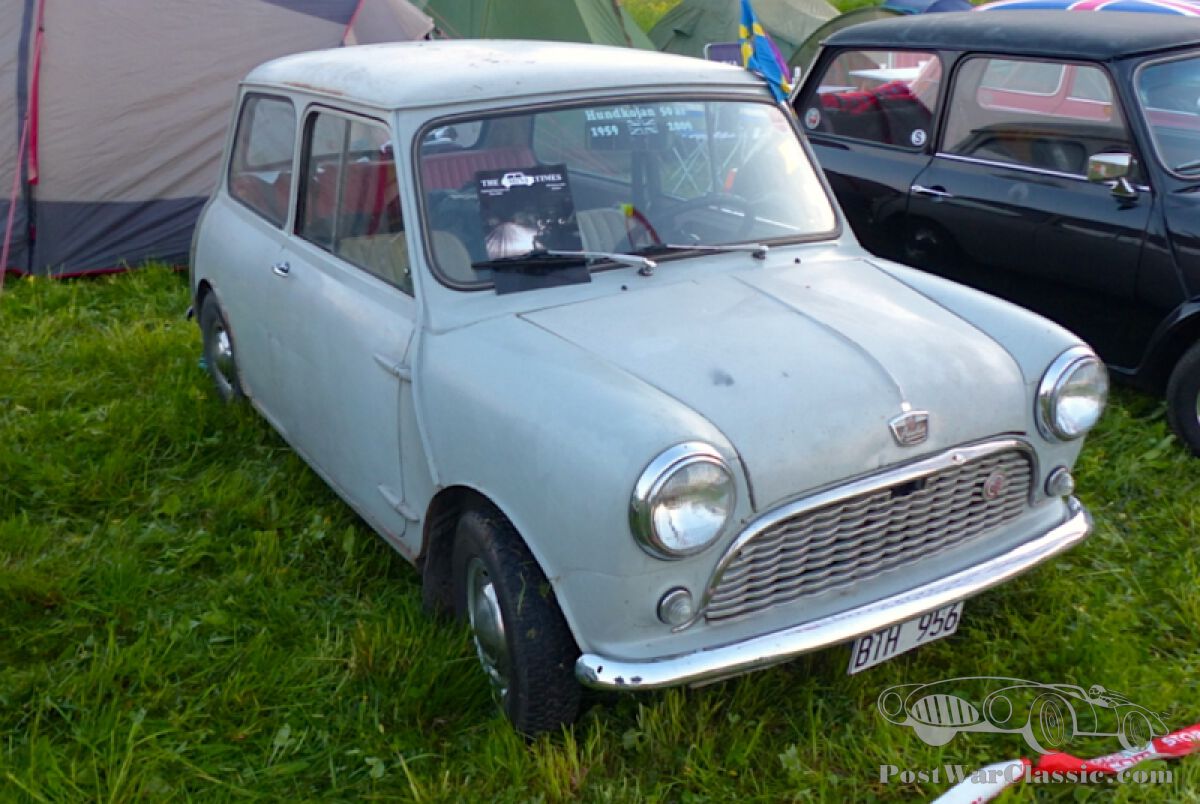

Among hundreds of Minis, many of them adorned with aftermarket gizmos and loud colour schemes, the little gem seen above was tucked away in a corner on a peninsula near Zarasai in north-eastern Lithuania, last weekend. That may seem an unusual location for a Mini, but it was the place to celebrate this year’s International Mini Meeting. Minis from far and wide came over to the Baltic to show off.
The Farina grey Mini depicted may seem totally unremarkable to many; when you know it’s a 1959-built car you may start to think differently. The earliest of Minis have been in the lift seriously since a rotten example made over 40,000 pounds at an auction in 2012. Several obsolete parts for this particular model have tenfolded in price since, with original glass washer bottles (only used in the first year of Mini production) making easily 500 GBP now.
We’re not sure but this Swedish registered car could well wear its first paint and appeared to have all the right ’59-features at situ. The name on the windscreen – Hundkoja – is Swedish for doghouse: the nickname the Swedes gave the classic Mini. It’s very good to see a car like this still being used for what it’s meant. Call it a doghouse or not: it was definitely one of our favourites during the event.
(Words and picture Jeroen Booij)
Pubblicato:
domenica maggio 31st, 2015
Facebook
LinkedIn
Twitter
WhatsApp
Email
Copy