La rivista e il marketplace globale per gli appassionati di auto d’epoca, creati da appassionati.


Il mercato; tutte le auto prebelliche in vendita
Panoramica degli annunci correlati all'annuncio 1973 Jaguar V12 coupe, 2 + 2
-

Alfa Romeo GTV 2000 Bertone Red '73
Imported from the NetherlandsOriginal Belgian carRecently maintainedNew tiresVery good condition, roadworthyBeautiful family oldtimer!SpecificationsBodyworkLength: cm (in): 410 (161.4)Width: cm (in): 158 (62.2)Height: cm (in): 132 (51.8).. -
1977 SUZUKI JIMNY LJ20 CONVERTIBLE
In the 1960s, Toyota’s FJ40 Land Cruiser was enjoying tremendous global success, and soon other Japanese manufacturers wanted to get their piece of the rapidly expanding civilian 4x4 market. Nissan quickly followed Toyota’s lead with the six-cylinder Patrol, while Mitsubishi had been building their own version of the Willys Jeep since 1953. Suzu.. -
1970 Mercedes-Benz 280SL Roadster
Spectacular condition!Only 14,624 documented miles!Two owners from newNumbers matching engine & automatic gearboxNumbers matching hood & removable factory hardtopDesirable 1970 280SL RoadsterOne of only 4,992 produced for the U.S. marketStunning factory color combinationWonderfully preserved interiorOptions Include:Power SteeringAutomati.. -
1967 JAGUAR XKE 2+2 COUPE
Jaguar’s revolutionary E-Type set the automotive world on fire when it debuted at the Geneva Auto Salon in 1961. Not only was the car clothed in a stunning body, but it featured cutting-edge technology reserved for the world’s most exclusive sports cars. The E-Type shared much of its specification with the world-beating D-Type, including a twin-.. -
1965 JAGUAR XKE ROADSTER
By 1960, Jaguar’s XK-150 sports car was beginning to show its age, and Jaguar was gearing up to make a big splash with its replacement. The XK series traced its roots back to 1948 with the XK-120, and the time had come for a radical new car that would recapture the magic that Jaguar’s reputation was founded upon. Company boss Sir William Lyons r.. -
1963 JAGUAR MARK II 3.8 SALOON
From its earliest days as S.S. Cars, luxurious and sporty saloon cars have sustained Jaguar through its highs and lows. In the mid-1950s, Jaguar was savoring the accomplishments of the XK sports cars and world-beating C-Type and D-Type sports racers. They even enjoyed surprising success with the massive MkVII and MkIX in British Saloon Car racin.. -
1960 JAGUAR XK150 3.8 FIXED HEAD COUPE
In 1957, Jaguar released the final and most advanced version of the XK-series of sports cars. The XK150 featured the most significant changes made since the XK120 appeared in 1949. The chassis was very similar to the outgoing 140, with independent front suspension, Salisbury rear axle, and rack and pinion steering. New for the 150, however, was .. -
1957 JAGUAR XK140 MC ROADSTER
Following hot on the heels of Jaguar’s sensational XK120, the XK140 debuted in 1955 featuring a number of improvements designed to address customer complaints with the 120. Thankfully, Jaguar was able to retain the arresting good looks of the original design, while allowing for more room and better-balanced handling. The XK140’s larger full-widt.. -
1951 JAGUAR XK120 FIXED HEAD COUPE
Over the years, Jaguar developed quite a knack at unveiling their latest and greatest sports cars to stunned audiences. It happened in the early 1990s with the spectacular XJ220 supercar. Before that, the E-Type set the world alight with its staggeringly beautiful lines and exotic construction. However, it was at the 1948 London Motor Show where.. -
1972 INTERMECCANICA ITALIA SPIDER
Intermeccanica was founded in 1960 by Canadians Frank and Paula Reisner. The Reisners fell in love with Italy while on vacation and on a whim, decided to resettle and start a new business, where Frank felt his engineering expertise and passion for sports cars would serve him well. Frank was a creative and dedicated engineer with extensive experi..


In primo piano
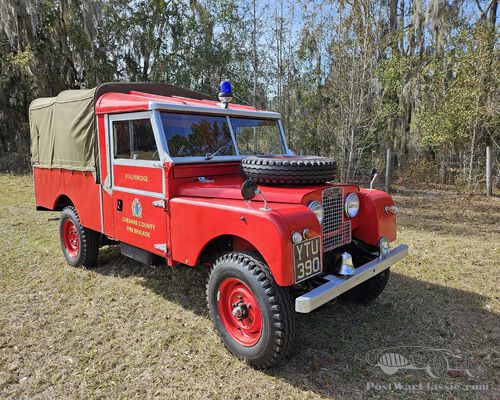
1957 Series 1 Land Rover Fire Engine + Coventry Climax Godiva Fire Pump
Betsy was used by Cheshire Fire Service (UK) from 1957 to 1975. She was based at Hazel Grove and Stalybridge Fire stations. She comes with an exten..
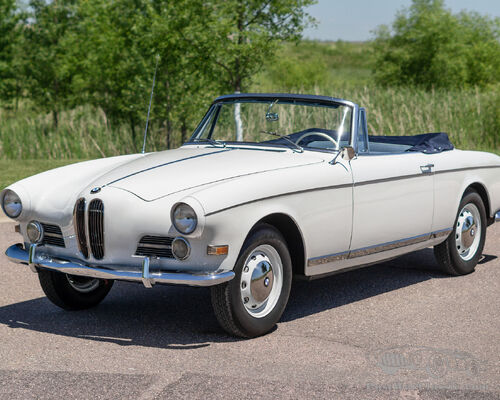
1957 BMW 503 Cabriolet (V8) – 1 di 13 costruiti per il mercato USA – #Esemplare matching
1957 BMW 503 Cabriolet Serie 1V8 in alluminio originale # MatchingCarrozzeria in alluminio originale con stampigliature di fab..