La rivista e il marketplace globale per gli appassionati di auto d’epoca, creati da appassionati.


Il mercato; tutte le auto prebelliche in vendita
Panoramica degli annunci correlati all'annuncio 1979 Jaguar SS100 by Suffolk Engineering For Sale
-

1972 Ferrari Dino 246GT | Historic Auctioneers | Farnborough International | 11th May 2024
The Dino, named in honour of Enzo Ferrari’s son, was a brand for V6 engined Ferraris and the project that Alfredo ‘Dino’ Ferrari worked on before he died tragically of muscular dystrophy at just 24 years old. In order to homologate Ferrari’s Formula Two entry in 1966, the FIA requested that 500 production cars were produced using the same V6 unit a.. -
1977 Jaguar Series II XJC V12 | Historic Auctioneers | Farnborough International | 11th May 2024
The XJ series of motorcars were the mainstay of Jaguar cars since 1968 and, in fact, was the last motorcar to have any input by Sir William Lyons, its founder. After the series I and II, a relatively short run of two-door XJ coupés with a pillarless hardtop body called the XJ-C were built between 1975 and 1978. The car was actually launched at the .. -
2000 Jaguar XKR Coupé | Historic Auctioneers | Farnborough International | 11th May 2024
The XK8 is a grand tourer car that was launched in 1996 and was the first generation of a new XK series available in either coupé or convertible body styles and with the new 4.0 litre Jaguar AJ-V8 engine. The 1998 XKR was introduced with a supercharged version of the engine. Both the XK8 and XKR are electronically limited to a maximum of 155mph, th.. -
1960 Jaguar XK150 Coupé | Historic Auctioneers | Farnborough International | 11th May 2024
The Jaguar XK150 was manufactured between 1957 and 1961 and despite having a family resemblance to the XK120 and XK140, the XK150 was radically modernised. A one-piece windscreen replaced the split screen and the wing line no longer dropped as much over the doors. The bonnet was widened, opened down to the wings and on the roadster, the bulkhead wa.. -
1950 Jaguar XK120 Roadster | Historic Auctioneers | Farnborough International | 11th May 2024
The Jaguar XK120 was manufactured between 1948 and 1954 and was Jaguar's first post-war sports car succeeding the SS100 which ceased production in 1940. It was launched in roadster form at the 1948 London Motor Show as a test bed and show car for the new Jaguar XK engine and caused a sensation, persuading William Lyons to put it into production. Th.. -
1974 Jensen Interceptor Convertible | Historic Auctioneers | Farnborough International | 11th May 2024
The Jensen Interceptor was a grand touring car produced between 1966 and 1976. One of the most coveted versions of this car was the 1974 Jensen Interceptor Convertible, which combined the sleek design and powerful engine of the Interceptor with the open-air experience of a convertible. Under the bonnet, the Jensen Interceptor Convertible featured a.. -
2006 Jaguar XKR Coupé 4.2-S | Historic Auctioneers | Farnborough International | 11th May 2024
The XK8 was launched in 1996 and was the first generation of a new XK series available in both coupé and convertible body styles and with the new 4.0 litre Jaguar, AJ-V8 engine. In 1998 the XKR was introduced with a supercharged version of the engine and both the XK8 and XKR were electronically limited to a maximum of 155mph; the top speed of its p.. -
1967 Jaguar 3.4 Mk. II by Beacham | Historic Auctioneers | Farnborough International | 11th May 2024
This impressive Jaguar left the world famous Coventry factory in April 1967. Originally finished in Opalescent Golden Sand with a contrasting red leather interior trim this stylish Jaguar was supplied new to Stapleton Tyre Services of Watford from the franchised dealer Henlys of London. The car remained in the UK until 1990 when it found a new hom.. -
1973 Datsun 240Z Samuri | Historic Auctioneers | Farnborough International | 11th May 2024
The Datsun 240Z, (latterly the 260Z and 280Z) was the first generation of 'Z' two-seat coupés, produced by Nissan in Japan from 1969 to 1978. Its dramatic looks owed a considerable amount to a 1960's styling concept drawn by Count Albrecht Goertz for Datsun, presumably at a time when they were considering ways to break into the European sports car .. -
1973 Lotus Elan Sprint FHC | Historic Auctioneers | Farnborough International | 11th May 2024
The Lotus Elan was introduced in 1962 and would go on to become one of the most successful sports cars of all time. It was the first Lotus road car to use the steel backbone chassis with fibreglass bodywork embodying Colin Chapman’s minimum weight design philosophy, weighing in at just 1,600Ibs. Powered by a 1558cc, twin-cam four-cylinder engine, t..





In primo piano
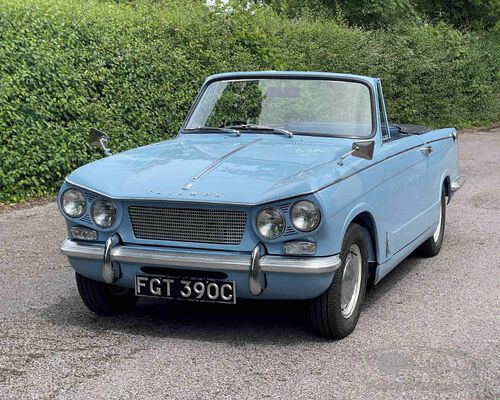
Triumph Vitesse 6 Convertible
Specifiche tecnicheMarca e modello: Triumph Vitesse 6 ConvertibleAnno: 1965Immatricolazione: Regno UnitoNumero d..
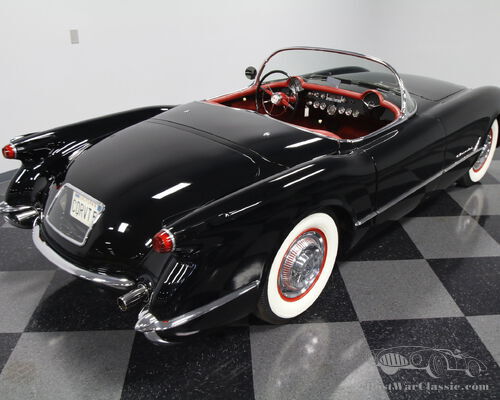
1954 Chevrolet Corvette C1
Fully restored 1954 C1 Corvette in Black. Stunningly beautiful car, feels like driving a sculptural work of Art. Known to be the oldest Corvette on t..
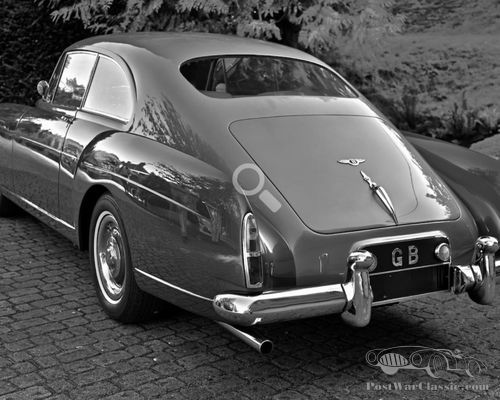
1957 Bentley S1 Fastback di H.J. Mulliner.
1957 Bentley S1 Fastback by H.J. Mulliner.Vettura recentemente restaurata e premiata, in condizioni pari al nuovo. Si tratta di un esemplare..