La rivista e il marketplace globale per gli appassionati di auto d’epoca, creati da appassionati.


Il mercato; tutte le auto prebelliche in vendita
Panoramica degli annunci correlati all'annuncio 1971 Fiat 500L
-

1970 Citroën DS 21 | Historics Auctioneers
After 18 years of secret development, the DS was introduced in October of 1955 at the Paris Motor Show. In the first 15 minutes of the show, 743 orders were taken and orders for the first day totalled 12,000 cars. It was the first mass-production car with front power disc brakes. It also featured hydropneumatic suspension including an automatic sel.. -
1970 Porsche 911L | Historics Auctioneers
This is a beautifully presented European specification 911L in Slate Grey with full red leather interior. The vehicle has recently received extensive recommissioning and refurbishment, with recent bills of over £25,000 to bring this superb car up to standard. This model is equipped with a 2.0 litre flat-six which we are informed performs faultlessl.. -
1977 Morgan Plus 8 FIA Race Car *WITHDRAWN* | Historics Auctioneers
DUE TO CIRCUMSTANCES BEYOND OUR CONTROL, THIS LOT HAS BEEN WITHDRAWN FROM THE AUCTIONThe Morgan Plus 8 was introduced in 1968 in England. Developed by Maurice Owen, it is based on a modified Plus 4 chassis and equipped with a V8 Rover engine attached to the Moss gearbox and a Salisbury axle with limited slip differential. The model gradually evolve.. -
1976 Ferrari 365 GT4 2+2 | Historics Auctioneers
At the Paris Auto Salon in 1972, Ferrari unveiled an all new car to the world. It was a fast, svelte and elegant 2+2 powered by their legendary V12 engine and was the most expensive series produced by Ferrari for 17 years. The 365 GT4 2+2 is easily distinguished from its successors by its six rear tail lights, knock-off alloy wheels, and lack of a .. -
1979 Aston Martin V8 Series 4 Oscar India | Historics Auctioneers
The Aston Martin V8 engine had begun development in the mid-sixties when it was first used in a Lola Sports racing car with a view to replacing the six cylinder unit which had been in production since the DB4 in 1958. Although always intended to house the new Tadek Marek-designed V8, the DBS first appeared with the 4 litre six of the concurrently p.. -
1977 Porsche 911 3.0 Litre Turbo | Historics Auctioneers
The 911 Turbo, introduced in 1975 would remain in production until 1989, and was sufficiently different from previous versions to earn a new 930 model number. These were proper ‘Supercars’, amongst the fastest production cars available at the time, and are now felt by many to be the cars that defined the early eighties. Developed initially for homo.. -
1979 Rolls-Royce Corniche | Historics Auctioneers
The Corniche was Rolls-Royce's coupé and convertible version of the Silver Shadow produced between 1971 and 1996. The Corniche was named 'Silver Shadow Mulliner Park Ward two door fixed head coupé' before 1971 when the Corniche name was applied. The exterior design was by John Polwhele Blatchley. The independent coach maker James Young had already .. -
1975 Range Rover Suffix ‘D’ | Historics Auctioneers
Right from the beginning, the Range Rover represented something of a lifestyle movement. Although considered rudimentary by today’s standards, the ‘Suffix A’ was billed as a ‘Four-In-One’ car. It was a luxury car, a performance car, an estate and, of course, a cross-country car. They were launched with the ubiquitous Rover V8 engine which delivered.. -
1971 Rolls-Royce Corniche Convertible | Historics Auctioneers
Rolls-Royce Motors formed Mulliner Park Ward by the 1961 merger of two Rolls-Royce subsidiaries: Park Ward of Willesden, London, a Rolls-Royce subsidiary since 1939 and H. J. Mulliner & Co. of Chiswick, a Rolls-Royce subsidiary since 1959. Mulliner Park Ward continues to operate as the vehicle customisation division of Bentley Motors Limited, t.. -
1973 Jaguar E-Type Series III Roadster | Historics Auctioneers
The E-Type would be one of the last great sports cars developed directly from a successful competition ancestor. Just as in the D-Type, a monocoque tub formed the main body/chassis structure for the E-Type while a tubular space frame extended forwards to support the engine. As the E-Type evolved so did customers needs, Jaguar had developed the twel..


In primo piano
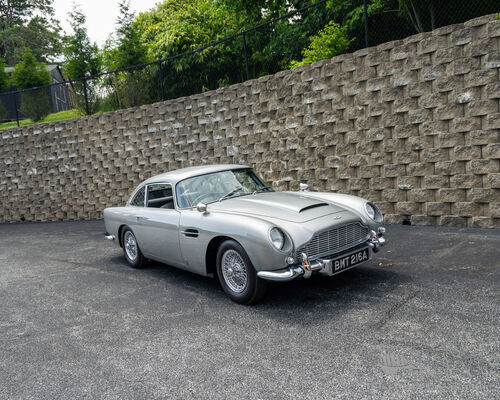
2020 Aston Martin DB5 Goldfinger Continuation
Offerta all'asta da RM Sotheby's durante The Monterey Auction, 13-15 agosto 2026. Stima: 1.000.000-1.500.000 USDUno dei s..
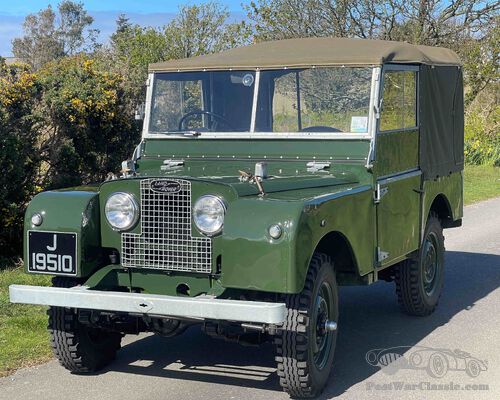
1952 Land Rover Series 1
Specifiche tecniche:Marca e modello: Land Rover Series !Anno: 1952Targa: immatricolata a Jersey..
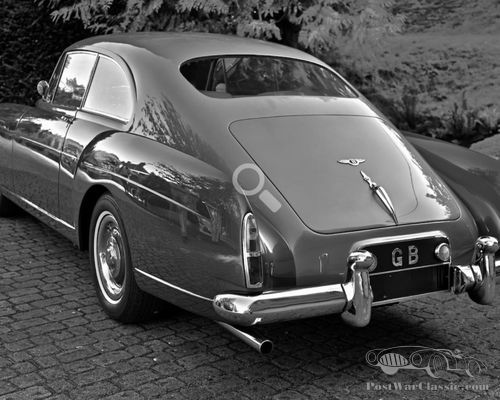
1957 Bentley S1 Fastback di H.J. Mulliner.
1957 Bentley S1 Fastback by H.J. Mulliner.Vettura recentemente restaurata e premiata, in condizioni pari al nuovo. Si tratta di un esemplare..