La rivista e il marketplace globale per gli appassionati di auto d’epoca, creati da appassionati.
La rivista e il marketplace globale per gli appassionati di auto d’epoca, creati da appassionati.


Faccia la sua scelta
- Automobile
-
Marca >>
-
Anno >>
-
- Motociclette
-
Anno >>
-
-
Ubicazione >>
- Parti e altro
-
Marca dell'auto >>
-
Produttore >>
-
Categoria >>
-
Paesi


Il mercato; tutte le auto prebelliche in vendita
Panoramica degli annunci correlati all'annuncio 1949 Jaguar Mark V Saloon 2.5 Litre
-

1959 Jaguar XK150 Fixedhead Coupé | Historics Auctioneers | Nov 26, 2022
This lovely right hand drive car is presented in its original colour of Old English White with red interior, on its original number plate 692 BTT. The car's originality is supported by a Jaguar Heritage Certificate, certified copy of the Devon Archives, and inspected by the London XK specialist from the Jaguar Enthusiasts Club. This example also re..1959JaguarXK150 Fixedhead CoupéVENDUTO -
2002 Jaguar XK8 Coupé | Historics Auctioneers | Nov 26, 2022
Jaguar cars today are designed in Jaguar Land Rover's engineering centres at the Whitley plant in Coventry and at their Gaydon site in Warwickshire with manufacturing in the Castle Bromwich assembly plant in Birmingham. The Jaguar XK series was introduced at the Geneva Motor Show on 5th March 1996 with the first generation of the series, the XK8, r..2002JaguarXK8 CoupéVENDUTO -
1962 Jaguar E-Type Series I Roadster | Historics Auctioneers | Nov 26, 2022
Launched at the 1961 Geneva Motor Show, the Jaguar E-Type was nothing short of a revelation. With its heady blend of supercar performance, breathtaking styling and low-price tag, the newcomer left rivals reeling and customers clamouring. Early sportscar racing success at the hands of Graham Hill and Roy Salvadori amongst others helped cement its re..1962JaguarE-Type Series I RoadsterVENDUTO -
1972 Jaguar E-Type Series III 2+2 Fixedhead Coupé | Historics Auctioneers | Nov 26, 2022
The Series III fulfils a roll in the E-Type line-up missed by previous generations by adding 6” into the wheelbase thus allowing the more mature and taller driver to enjoy the visceral experience first penned by Jaguar’s chief designer back with the Series I in the mid-1960s. Albeit now with a smother 12-cylinder power plant, generally more space a..1972JaguarE-Type Series III 2+2 Fixedhead CoupéVENDUTO -
1970 Jaguar E-Type Series II Coupé | Historics Auctioneers | Nov 26, 2022
From its launch in 1961 to the end of its production in 1975, the Jaguar E-Type went from design revelation to motoring icon in a generation. Based on Jaguar’s three time Le Mans winning D-Type and known internationally for its beautiful sleek lines and a top speed of 150mph, this revolutionary car had three significant series changes during its 14..1970JaguarE-Type Series II CoupéVENDUTO -
1950 Jaguar XK120 Roadster Ex-Duncan Hamilton | Historics Auctioneers | Nov 26, 2022
The Jaguar XK120 was manufactured between 1948 and 1954 and was their first sportscar since the SS100 which ceased production in 1940. It was launched in roadster form at the 1948 London Motor Show as a show car for the new Jaguar XK engine. It caused a sensation thus persuading Jaguar founder and design boss, William Lyons, to put the car into pro..1950JaguarXK120 Roadster Ex-Duncan HamiltonVENDUTO -
1974 Jaguar E-Type Series III Roadster | Historics Auctioneers | Nov 26, 2022
The Jaguar E-Type was ten years old and in need of a new lease of life. History repeated itself when Jaguar debuted its robust V12 engine in a sportscar instead of the saloon for which it was designed. Despite its sportscar heritage, Jaguar depended on saloon vehicles for its survival and had developed the twelve-cylinder engine to power them with ..1974JaguarE-Type Series III RoadsterVENDUTO -
1964 Jaguar E-Type Series I Roadster (3.8 Litre) | Historics Auctioneers | Nov 26, 2022
Introduced in 1961, the Jaguar E-Type caused a sensation when it appeared with its instantly classic lines and 150mph top speed. While, inevitably, the car's stupendous straight-line performance and gorgeous looks grabbed the headlines, there was a lot more to the E-Type beneath the skin. The newcomer's design owed much to that of the racing D-Type..1964JaguarE-Type Series I Roadster (3.8 Litre)VENDUTO -
2009 Jaguar X-Type Estate Ex-HM Queen Elizabeth II | Historics Auctioneers | Nov 26, 2022
The Jaguar X-Type is a front-engine, all-wheel/front-wheel drive compact executive car manufactured and marketed from 2001 to 2009. In addition to offering Jaguar's first estate in series production, the X-Type would ultimately introduce its first diesel engine, four-cylinder engine and front-wheel drive configuration. The X-Type was developed dur..2009JaguarX-Type Estate Ex-HM Queen Elizabeth IIVENDUTO -
1990 Jaguar XJS Convertible | Historics Auctioneers | Nov 26, 2022
In 1975, the Jaguar E-Type finally gave way to an all new and more efficient Jaguar, the Jaguar XJS. This new luxury grand tourer, although never quite having the same sporting image as the E-Type, was actually more aerodynamic with the final example leaving the production line on 4th April 1996; at that stage 115,413 units had been manufactured du..1990JaguarXJS ConvertibleVENDUTO


In primo piano
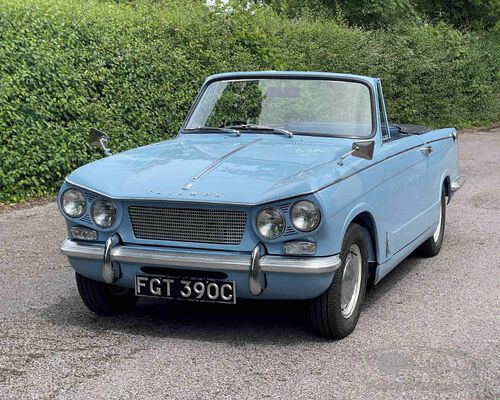
Triumph Vitesse 6 Convertible
Specifiche tecnicheMarca e modello: Triumph Vitesse 6 ConvertibleAnno: 1965Immatricolazione: Regno UnitoNumero d..
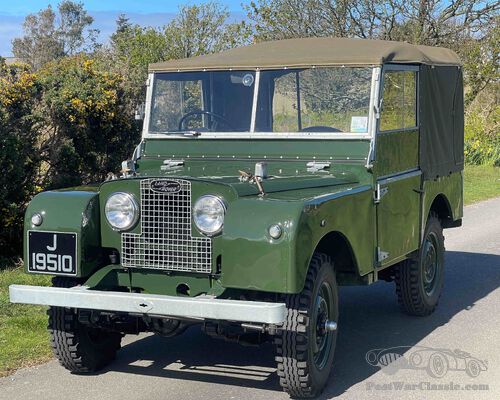
1952 Land Rover Series 1
Specifiche tecniche:Marca e modello: Land Rover Series !Anno: 1952Targa: immatricolata a Jersey..
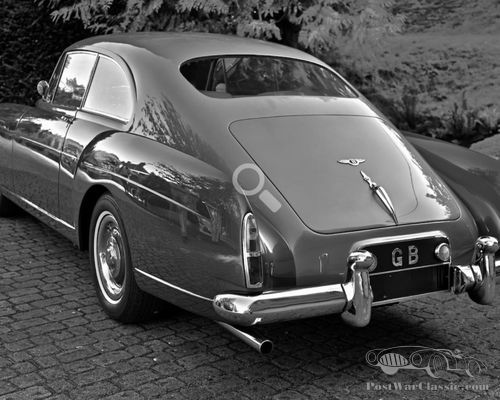
1957 Bentley S1 Fastback di H.J. Mulliner.
1957 Bentley S1 Fastback by H.J. Mulliner.Vettura recentemente restaurata e premiata, in condizioni pari al nuovo. Si tratta di un esemplare..