La rivista e il marketplace globale per gli appassionati di auto d’epoca, creati da appassionati.


Il mercato; tutte le auto prebelliche in vendita
Panoramica degli annunci correlati all'annuncio 1998 Rolls Royce Silver Seraph
-

1998 RUF Turbo R | Amelia Island Auctions | Gooding & Co | March 2-3, 2023
Founded as a general service garage and mechanical repair shop, RUF Automobile GmbH has evolved into an world-class automobile manufacturer of finely engineered supercars based on the Porsche 911. Introduced in 1998, the RUF Turbo R was based on the 993-generation Porsche 911 Turbo. While appearing similar to the standard Porsche model,.. -
2007 RUF RK Coupe | Amelia Island Auctions | Gooding & Co | March 2-3, 2023
Originally established as a general service garage in Pfaffenhausen, Germany, in 1939, RUF Automobile GmbH later evolved into a Porsche specialist and tuner during the late 1970s. Receiving TÜV certification in 1981 from the German government allowing it to manufacture cars under its name, RUF began to launch its own stylized and elevated Porsch.. -
1998 RUF Turbo R Cabriolet | Amelia Island Auctions | Gooding & Co | March 2-3, 2023
Located three hours east of Stuttgart, RUF Automobile GmbH was founded in 1939 by Alois Ruf Sr. as a general service and automotive repair workshop. Following his father’s passing in 1974, Alois Ruf Jr. indulged his passion for the marque and refocused the company on modifying and building Porsche-based automobiles. In 1981, the German TÜV (Tech.. -
1997 RUF BTR2 | Amelia Island Auctions | Gooding & Co | March 2-3, 2023
The first RUF model to use the now famous W09 serial number was the 1983 BTR. Standing for Gruppe B Turbo RUF, the G series-based BTR was made available in a variety of body configurations. Appearing similar to the standard Porsche Turbo models with the primary exception of a new front spoiler, RUF honed every area affecting performance. Powered.. -
1992 Mercedes-Benz 500E | Amelia Island Auctions | Gooding & Co | March 2-3, 2023
The product of an unlikely partnership, the Mercedes-Benz 500E was first unveiled in 1990 at the Paris Motor Show. As Mercedes-Benz was preoccupied with the engineering of the next-generation S-Class, they partnered with Porsche to develop a performance-oriented version of their popular E-Class. Tasked with fitting the 5.0-liter V-8 used in the .. -
1994 Ferrari 512 TR | Amelia Island Auctions | Gooding & Co | March 2-3, 2023
Unveiled in 1984, the Testarossa was Ferrari’s flagship offering, which replaced the outgoing 512 BBi and introduced their iconic flat-12 to new markets. The famous wedge shape, coupled with its unique side strakes made its styling synonymous with the 1980s, popularized by the likes of Miami Vice and Out Run. The drivetrain was considerably impr.. -
2016 Porsche 991 GT3 RS | Amelia Island Auctions | Gooding & Co | March 2-3, 2023
For the 2016 model year, the 991 GT3 became the latest car from Stuttgart to wear the hallowed RS moniker. As per previous generations, the RS was made more hardcore – lighter, faster, and sharper – than the standard model. With increased displacement over the standard GT3, the RS’ 4.0-liter flat-six engine developed 500 hp and 338 lbs./ft. of t.. -
2001 Lamborghini Diablo 6.0 VT Coupe | Amelia Island Auctions | Gooding & Co | March 2-3, 2023
Additional images and completeIn the first 35 years of Lamborghini’s history, the company had more than half a dozen owners and spent many years being unprofitable. Despite this tumultuous environment, the cars wearing the raging bull were remarkably consistent: exotic, extraverted, and extremely high performance. The follow-up to the sensationa.. -
1991 Porsche 944 S2 Cabriolet | Amelia Island Auctions | Gooding & Co | March 2-3, 2023
Porsche’s 944 series debuted in 1982 and its production ended nearly a decade later in 1991. Constructed on the same platform as the 924, the 944 was one of the most successful Porsche production cars of the era. The 944 S2 was introduced in 1989, powered by a new and more powerful three-liter engine that offered an excellent torque curve and pr.. -
1989 Porsche 911 Carrera Speedster | Amelia Island Auctions | Gooding & Co | March 2-3, 2023
As Porsche began to phase out the 911 3.2 Carrera in anticipation of the 964-generation 911, it developed the Speedster as a final special edition to see the model out. Produced between January and July 1989, the Speedster was intended to harken back to the famous 356 Speedster of the 1950s. It featured numerous throwback design elements such as..



In primo piano
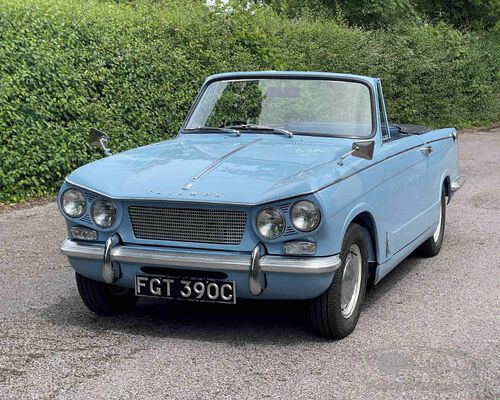
Triumph Vitesse 6 Convertible
Specifiche tecnicheMarca e modello: Triumph Vitesse 6 ConvertibleAnno: 1965Immatricolazione: Regno UnitoNumero d..
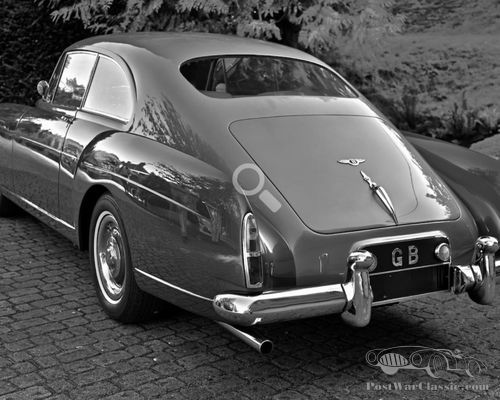
1957 Bentley S1 Fastback di H.J. Mulliner.
1957 Bentley S1 Fastback by H.J. Mulliner.Vettura recentemente restaurata e premiata, in condizioni pari al nuovo. Si tratta di un esemplare..
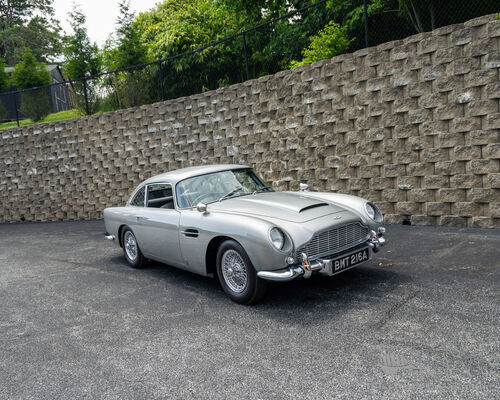
2020 Aston Martin DB5 Goldfinger Continuation
Offerta all'asta da RM Sotheby's durante The Monterey Auction, 13-15 agosto 2026. Stima: 1.000.000-1.500.000 USDUno dei s..