La rivista e il marketplace globale per gli appassionati di auto d’epoca, creati da appassionati.


Il mercato; tutte le auto prebelliche in vendita
Panoramica degli annunci correlati all'annuncio Jaguar XJ-SC Targa from 1986 - *** in EXCELLENT NEW CONDITION *** ACTUAL TOP CAR
-

1990 Aston Martin Virage | Historics Auctioneers
Introduced at the 1988 Birmingham Motor Show, the Virage was Aston Martin’s replacement for the decades old V8 models. The Virage was launched as the top of the range car for Aston Martin. It is easy to see why this handbuilt, all aluminium V8 was king of the Astons. The 32 valve, 5.3 litre engine elevated the performance of the Virage to near spor.. -
1989 Mercedes-Benz 300 SL Roadster | Historics Auctioneers
Mercedes-Benz have been producing an SL model or range of models since 1954. The similarly styled but mechanically unrelated 190 followed in 1955, completing the first generation of cars. The second generation SL's began with the 230 in 1963. It was distinguished by its lower waistline, big curved screens and a distinctive optional hardtop that ear.. -
1986 Ferrari Testarossa (Monospecchio) | Historics Auctioneers
Interested parties should note that this is a library image. Pictures of this vehicle will be added shortly.At the Paris Salon of 1984, Ferrari presented the successor to the legendary BB512 after nearly ten years of production. Called Testarossa, referring to the legendary Le Mans winning car, it is again the work of Pininfarina. The Testarossa is.. -
1980 Mitsubishi Sapporo | Historics Auctioneers
The Mitsubishi Sapporo coupé was in production from 1978 until 1984. These were very well equipped vehicles for the time. Standard equipment included four electric windows revealing a great looking pillarless coupé, power steering, alloy wheels and a radio cassette. Compare that to the UK based manufacturers at the time and it is easy to see how th.. -
1966 Jaguar S-Type (3.4 litre) | Historics Auctioneers
Produced from 1963 to 1968, the Jaguar S-Type was technically a more sophisticated development of the Jaguar Mk. II, offering buyers a more luxurious alternative. It was available with either 3.4 or 3.8 litre XK engines and featured longer rear bodywork among other styling and interior changes. Despite its extra weight, the S-Type's independent rea.. -
1983 Mercedes-Benz 380SL | Historics Auctioneers
Introduced in early 1971, this impressive two-seater sports car replaced the 280 SL. The body and chassis of the third generation SL was considerably heavier and longer than its predecessor but it still showed a resemblance. The standard transmission provided a top speed of 130mph and a very respectable 0-62mph in 8.8 seconds. As with the previous .. -
1990 Mini Mayfair | Historics Auctioneers
The Mini was a made by the British Motor Corporation (BMC) and its successors from 1959 until 2000. The original is considered a British icon of the 1960’s, and its space-saving front-wheel drive layout which allowed 80% of the car's floorpan to be used for passengers and luggage, influenced a generation of car makers. In 1999 the Mini was voted th.. -
1972 Jaguar E-Type Series III Roadster | Historics Auctioneers
In March 2008, the Jaguar E-Type ranked first in the Daily Telegraph's list of the '100 most beautiful cars' of all time. It was initially designed and shown to the public as a grand tourer in two-seater coupé form and as convertible. The model was made in three distinct versions which are now generally referred to as 'Series I', 'Series II' and 'S.. -
1958 Jaguar Mk. I (3.4 litre) | Historics Auctioneers
Launched in 1955, the Mk. I extended Jaguar's domination of the high-performance car market in Britain, slotting neatly into the Coventry firm's range alongside the big Mk. VII M saloon and the XK140 sports car. The medium size newcomer broke new ground for Jaguar, being its first model to employ unitary construction of the chassis/body. Jaguar's e.. -
1960 Jaguar Mk. II (3.8 litre) | Historics Auctioneers
Built between 1959 and 1967 the Jaguar Mk. II is a medium sized saloon car constructed in Coventry as the successor to the Jaguar 2.4 litre and 3.4 litre models manufactured between 1957 and 1959. These retrospectively became known as the Jaguar Mk. I following the release of the Mk. II in 1959. Adhering to Sir William Lyons' maxim of ‘grace, pace ..


In primo piano
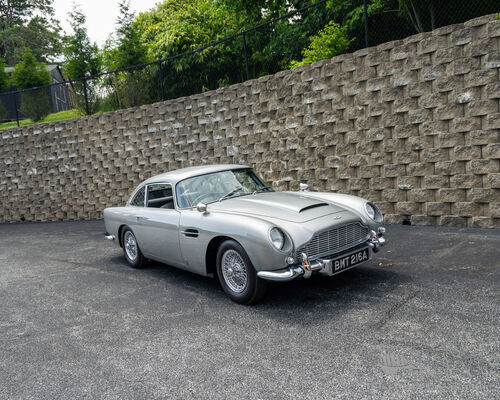
2020 Aston Martin DB5 Goldfinger Continuation
Offerta all'asta da RM Sotheby's durante The Monterey Auction, 13-15 agosto 2026. Stima: 1.000.000-1.500.000 USDUno dei s..
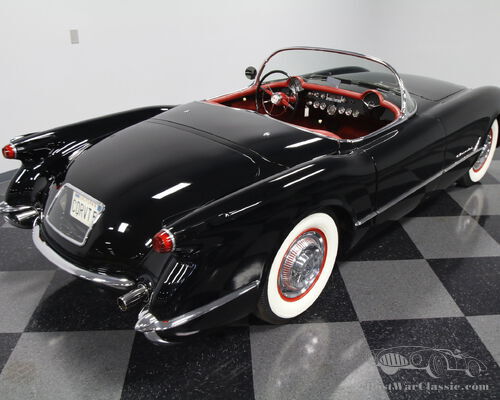
1954 Chevrolet Corvette C1
Fully restored 1954 C1 Corvette in Black. Stunningly beautiful car, feels like driving a sculptural work of Art. Known to be the oldest Corvette on t..
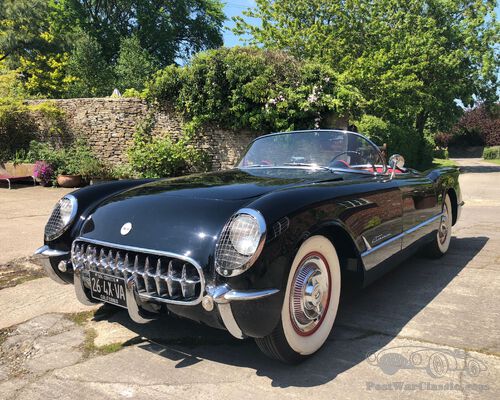
1954 Corvette C1 - SUPER RARE Black!!
Looking for her next lover, my classy 1954 Corvette C1. She's a beautiful sculpture. Never have i had so many adoring comments as when drivi..