La rivista e il marketplace globale per gli appassionati di auto d’epoca, creati da appassionati.


Il mercato; tutte le auto prebelliche in vendita
Panoramica degli annunci correlati all'annuncio 1972 Ferrari 365 GTC4 by Pininfarina
-

1973 Citroen SM | Selections from the Mullin Collection Auction | Gooding & Company | April 26, 2024
As one of the most daring and coveted grand touring automobiles ever produced, the Citroën SM was developed in the wake of the Citroën-Maserati corporate marriage of 1968. Handsomely styled and based upon Citroën’s front-drive chassis, the SM featured the marque’s unique and super-smooth hydropneumatic suspension, with power delivered by a great.. -
1978 Citroen Dyane | Selections from the Mullin Collection Auction | Gooding & Company | April 26, 2024
In response to Renault’s strong-selling 4CV, Citroën launched the Dyane in January 1968. An update of the venerable but dated 2CV, the Dyane was based on the same chassis as the 2CV and shared its independent suspension, which was ingeniously interconnected front to rear. Power was initially delivered by the proven 602 cc engine from the Ami 6, .. -
1973 Citroen GS Birotor | Selections from the Mullin Collection Auction | Gooding & Company | April 26, 2024
Following the 1969–1971 trial program for the innovative rotary-powered M35, the Citroën GS-based Birotor was powered by, as the name implies, a twin-chamber engine with design rooted in the work of famed German engineer Dr. Felix Wankel and development by NSU. In the case of the GS Birotor, its power unit was supplied by Comotor, a joint ventur.. -
1971 Citroen DS21 Pallas | Selections from the Mullin Collection Auction | Gooding & Company | April 26, 2024
The Citroën DS is undoubtedly one of the most ambitious, influential, and distinctive automobiles ever produced. Introduced for 1956, nearly 1.5 million examples were built through 1973, comprising the DS19, DS21, and DS23. Universally praised by auto magazine road testers and owners, the DS earned consistent accolades throughout production for .. -
1973 Citroen HY78 Van | Selections from the Mullin Collection Auction | Gooding & Company | April 26, 2024
Always innovating and developing practical vehicles to suit the diverse needs of Europeans, Citroën developed and produced the first front-drive lightweight utility van prior to the outbreak of WWII in Europe. While only an estimated 2,000 examples were built, the TU-B inspired its postwar successor, the Type H, which debuted at the 1947 Paris M.. -
1970 Citroen M35 Prototype | Selections from the Mullin Collection Auction | Gooding & Company | April 26, 2024
Following Citroën’s remarkable postwar successes with the 2CV, DS/ID 19 and 21, Ami 6, and Ami 8, company management decided to explore the possibilities afforded by the revolutionary Wankel rotary engine during the late 1960s. Based upon a heavily modified Ami 8 platform with distinctive hand-built bodywork by Heuliez, the M35 was powered by a .. -
1973 Citroen DS23 Prestige | Selections from the Mullin Collection Auction | Gooding & Company | April 26, 2024
While the top factory-available trim level for the Citroën DS was indeed the well-appointed Pallas, named after Greek goddess Pallas Athena, coachbuilder Henri Chapron offered the elite Prestige option, listed in the official Citroën model catalogue. Worthy of heads of state and the wealthiest personalities, the Chapron-upgraded DS was available.. -
1974 Citroen SM | Selections from the Mullin Collection Auction | Gooding & Company | April 26, 2024
From inception, France’s Citroën has been responsible for some of the most innovative and unique automobiles ever produced, from the front-drive Traction Avant originated during the 1930s to the advanced DS series and likely the marque’s finest, the SM (Série Maserati). Developed in the wake of the Citroën-Maserati merger in 1968, the SM feature.. -
1981 Ferrari 400i | Historic Auctioneers | Farnborough International | 11th May 2024
These magnificent 12-cylinder Ferraris have enjoyed gaining cult status for some years now and the angular Pininfarina design was the motivating factor behind this front-engined masterpiece. The design was derived from the almost identical looking 365 GT4 2+2 which, itself, was based on the legendary Daytona. Production began in 1976 when Ferrari r.. -
1971 Fiat 500 My Car Francis Lombardi | Historic Auctioneers | Farnborough International | 11th May 2024
The 500 My Car was a version of the New 500 developed by the Vercelli body shop Francis Lombardi between 1968 and 1971. It was not the only New 500 modified by the Piedmontese coachbuilder, but it was the only one to have commercial success. Incomplete cars arrived at the Vercelli body shop from Fiat, to be completed with the appropriate Francis Lo..


In primo piano
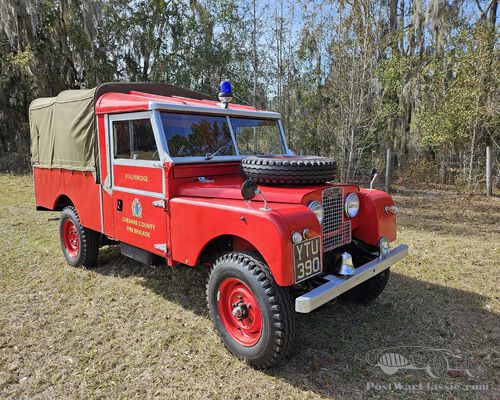
1957 Series 1 Land Rover Fire Engine + Coventry Climax Godiva Fire Pump
Betsy was used by Cheshire Fire Service (UK) from 1957 to 1975. She was based at Hazel Grove and Stalybridge Fire stations. She comes with an exten..

Rolls-Royce
Rolls-Royce Silver Wraightlinks gestuurd, automatic, stuurbekrachtigingkleur antraciet grijs, lopende auto op Nederlands kenteken
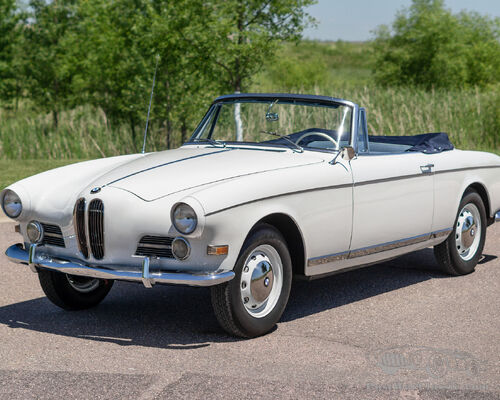
1957 BMW 503 Cabriolet (V8) – 1 di 13 costruiti per il mercato USA – #Esemplare matching
1957 BMW 503 Cabriolet Serie 1V8 in alluminio originale # MatchingCarrozzeria in alluminio originale con stampigliature di fab..