La rivista e il marketplace globale per gli appassionati di auto d’epoca, creati da appassionati.


Il mercato; tutte le auto prebelliche in vendita
Panoramica degli annunci correlati all'annuncio Triumph TR4
-

1972 Triumph GT6 Mk. III | Historic Auctioneers | Farnborough International | 11th May 2024
Designed by Giovanni Micheloti, famed for the creation of many Italian exotics such as Ferrari and Maserati. The styling of the car was met with great reviews. Triumph decided to revisit the GT4 idea and in replacing the under-powered Spitfire 4 engine with the more powerful Triumph Vitesse two-litre, six-cylinder engine, the GT6 was born and produ.. -
1970 Triumph TR6 CP Fast Road | Historic Auctioneers | Farnborough International | 11th May 2024
The Triumph TR6 was manufactured for seven years, starting in 1969, and by the time production came to an end in July 1976, it was the best-seller of the TR range. The bodywork closely resembled that of the previous model, the Triumph TR5, but the front and rear were squared off and all TR6s featured inline six-cylinder engines. For the US market, .. -
1966 Volvo 131 Amazon | Historic Auctioneers | Farnborough International | 11th May 2024
Introduced to the UK in November 1958, Volvo's highly successful 120-series 'Amazon' was built around a steel-fabricated monocoque. Equipped with independent coil and wishbone front suspension and a Panhard rod located rear axle, it quickly acquired a reputation for toughness, longevity, and reliability. Powered by a choice of torquey four-cylinder.. -
1966 Volkswagen 15 Window Deluxe | Historic Auctioneers | Farnborough International | 11th May 2024
The Volkswagen Type 2 was introduced in 1950 as a multi-variant utility vehicle, known as the Transporter, Kombi or Microbus (depending on body type). The first generation of these versatile vehicles (named the T1) was produced with distinctive split-screens from 1950 until 1967. Only two models were originally offered, the Kombi and the Commercial.. -
1960 Jaguar XK150 Coupé | Historic Auctioneers | Farnborough International | 11th May 2024
The Jaguar XK150 was manufactured between 1957 and 1961 and despite having a family resemblance to the XK120 and XK140, the XK150 was radically modernised. A one-piece windscreen replaced the split screen and the wing line no longer dropped as much over the doors. The bonnet was widened, opened down to the wings and on the roadster, the bulkhead wa.. -
1960 Facel Vega HK500 | Historic Auctioneers | Farnborough International | 11th May 2024
Founded by Jean Daninos in 1939, Forges et Ateliers de Construction d'Eure-et-Loir (FACEL) originally specialised in the production of aircraft materials. After World War II, Facel distributed car bodies to Panhard, Simca and Ford France. It would not be until 1954 that Facel began to manufacture its own vehicle, the Facel Vega FV, unveiled at the .. -
1969 Mercedes-Benz 280 SL Pagoda | Historic Auctioneers | Farnborough International | 11th May 2024
The Mercedes-Benz W113 SL was developed under the auspices of Mercedes-Benz Technical Director Fritz Nallinger, Chief Engineer Rudolf Uhlenhaut and Head of Styling, Friedrich Geiger. The lead designers were Paul Bracq and Béla Barényi who created its distinctive, patented, slightly concave hardtop which inspired the 'Pagoda' nickname. The model was.. -
1965 Mercedes-Benz 300SE Fintail | Historic Auctioneers | Farnborough International | 11th May 2024
The Mercedes-Benz 300 SE entered production in saloon, coupé and cabriolet form and was one of four models to share the new ‘Fintail’ body style first seen at the Frankfurt Auto Show in 1959. It became the flagship model at the time of its introduction in 1961, superseding the 300 ‘Adenauer’ and would remain so until the arrival of the 600 ‘Grosser.. -
1967 Jaguar 3.4 Mk. II by Beacham | Historic Auctioneers | Farnborough International | 11th May 2024
This impressive Jaguar left the world famous Coventry factory in April 1967. Originally finished in Opalescent Golden Sand with a contrasting red leather interior trim this stylish Jaguar was supplied new to Stapleton Tyre Services of Watford from the franchised dealer Henlys of London. The car remained in the UK until 1990 when it found a new hom.. -
1966 Austin Healey 3000 Mk. III | Historic Auctioneers | Farnborough International | 11th May 2024
The Healey 3000 represents one of the most graceful and yet powerful classic English sportscars ever produced. It started with the 100/4, subsequently enlarged to 2.6 litres in the 100/6 and finally the powerful incarnation, the three litre, 3000. All three incarnations looked superb and drove equally well hence their regular use within motorsport...






In primo piano
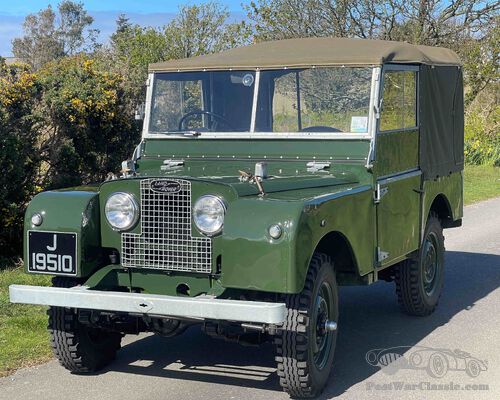
1952 Land Rover Series 1
Specifiche tecniche:Marca e modello: Land Rover Series !Anno: 1952Targa: immatricolata a Jersey..
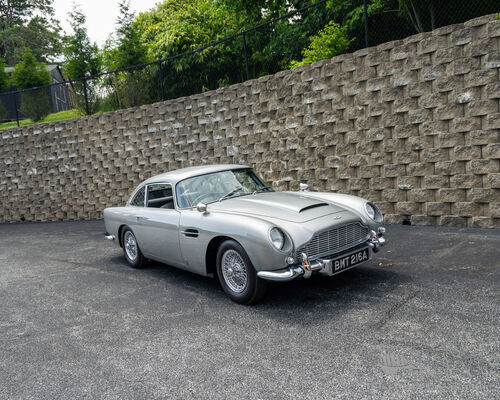
2020 Aston Martin DB5 Goldfinger Continuation
Offerta all'asta da RM Sotheby's durante The Monterey Auction, 13-15 agosto 2026. Stima: 1.000.000-1.500.000 USDUno dei s..
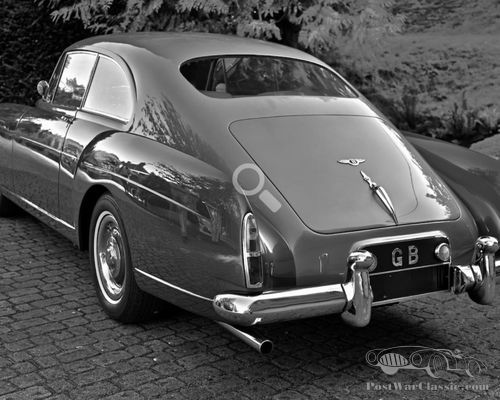
1957 Bentley S1 Fastback di H.J. Mulliner.
1957 Bentley S1 Fastback by H.J. Mulliner.Vettura recentemente restaurata e premiata, in condizioni pari al nuovo. Si tratta di un esemplare..