La rivista e il marketplace globale per gli appassionati di auto d’epoca, creati da appassionati.


Il mercato; tutte le auto prebelliche in vendita
Panoramica degli annunci correlati all'annuncio 1972 Citroen DS 23 PALLAS
-

1972 OPEL KADETT B
INTERN CODE : OPL00004We offer logistics and home delivery service.Shipping costs are the responsibility of the buyer.Wide range of cars & motorbikes in offer in our premises.The car is visible in our showroom in Reggio Emilia/Firenze, Italy.For more information please contact:Petru: +39 338 642 9745.. -
1986 Citroen 2CV6 Special | Selections from the Mullin Collection Auction | Gooding & Company | April 26, 2024
Affectionately known as the “Tin Snail” by legions of French automobile owners, Citroën’s elegantly simple 2CV offered durable, versatile, and low-cost motoring during the postwar decades, much the same as Germany’s Volkswagen Beetle did. Featuring a minimalistic body, seating for up to four adults, and an economical, easily serviced air-cooled .. -
1975 Citroen Ami 8 Berline | Selections from the Mullin Collection Auction | Gooding & Company | April 26, 2024
Sporting a freshly revised frontal treatment and interior updates, Citroën’s Ami 8 debuted at the 1969 Geneva Motor Show and went on to enjoy a lengthy production run, with the advent of its successor, the Visa. Powered by the same 602 cc air-cooled two-cylinder engine of its predecessor, the Ami 6, the Ami 8 amply demonstrated the soundness and.. -
1954 Citroen Type 11CL Traction Avant | Selections from the Mullin Collection Auction | Gooding & Company | April 26, 2024
The Traction Avant was a huge success for Citroën, with over 759,000 examples built from 1934 through 1957, interrupted only during wartime in Europe. Strong demand for these sophisticated French road cars encouraged international production, with Citroën’s Parisian factory output supplemented by examples built in Belgium, Denmark, Germany, and .. -
1973 Citroen SM | Selections from the Mullin Collection Auction | Gooding & Company | April 26, 2024
As one of the most daring and coveted grand touring automobiles ever produced, the Citroën SM was developed in the wake of the Citroën-Maserati corporate marriage of 1968. Handsomely styled and based upon Citroën’s front-drive chassis, the SM featured the marque’s unique and super-smooth hydropneumatic suspension, with power delivered by a great.. -
1957 Citroen 2CV AZ | Selections from the Mullin Collection Auction | Gooding & Company | April 26, 2024
The original Citroën 2CV was an immediate success from introduction in 1948, with availability initially prioritized – at the suggestion of Citroën chief engineer Paul Boulanger – for purchasers who were required to drive for their professions, including country veterinarians, doctors, midwives, priests, and small-scale farmers. Select and welco.. -
1978 Citroen Dyane | Selections from the Mullin Collection Auction | Gooding & Company | April 26, 2024
In response to Renault’s strong-selling 4CV, Citroën launched the Dyane in January 1968. An update of the venerable but dated 2CV, the Dyane was based on the same chassis as the 2CV and shared its independent suspension, which was ingeniously interconnected front to rear. Power was initially delivered by the proven 602 cc engine from the Ami 6, .. -
1969 Citroen DS21 d'Usine Cabriolet | Selections from the Mullin Collection Auction | Gooding & Company | April 26, 2024
Introduced in 1965, the Citroën DS21 was an uprated and upgraded version of the groundbreaking DS19, featuring a larger 2,175 cc engine and an improved interior. As with its predecessor, the DS21 was offered as a sedan (berline) and station wagon (break). Select styling by Robert Opron brought a revised headlamp treatment by 1967. The visually s.. -
1973 Citroen GS Birotor | Selections from the Mullin Collection Auction | Gooding & Company | April 26, 2024
Following the 1969–1971 trial program for the innovative rotary-powered M35, the Citroën GS-based Birotor was powered by, as the name implies, a twin-chamber engine with design rooted in the work of famed German engineer Dr. Felix Wankel and development by NSU. In the case of the GS Birotor, its power unit was supplied by Comotor, a joint ventur.. -
1967 Citroen ID19 | Selections from the Mullin Collection Auction | Gooding & Company | April 26, 2024
A simplified companion model to the DS, Citroën’s ID19 was introduced at the 1956 Paris Salon, one year after the DS made its debut there. Powered by a 1.9-liter engine shared with its “senior” stablemate, albeit slightly detuned, the ID19 also delivered the advantages of front-wheel drive and retained essentially the same body styling as the DS..



In primo piano
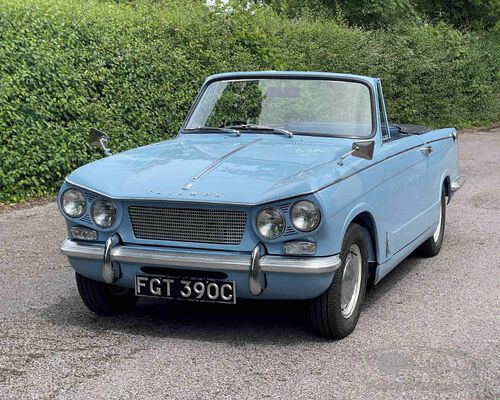
Triumph Vitesse 6 Convertible
Specifiche tecnicheMarca e modello: Triumph Vitesse 6 ConvertibleAnno: 1965Immatricolazione: Regno UnitoNumero d..
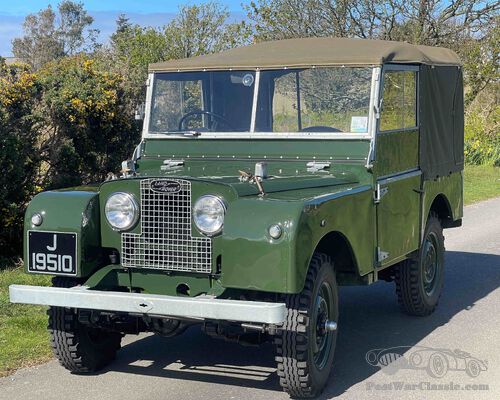
1952 Land Rover Series 1
Specifiche tecniche:Marca e modello: Land Rover Series !Anno: 1952Targa: immatricolata a Jersey..
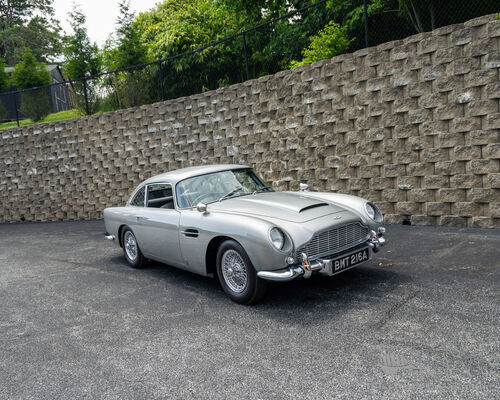
2020 Aston Martin DB5 Goldfinger Continuation
Offerta all'asta da RM Sotheby's durante The Monterey Auction, 13-15 agosto 2026. Stima: 1.000.000-1.500.000 USDUno dei s..