La rivista e il marketplace globale per gli appassionati di auto d’epoca, creati da appassionati.


Il mercato; tutte le auto prebelliche in vendita
Panoramica degli annunci correlati all'annuncio Land Rover 88 Series III
-

1997 Land Rover Defender 110 Hardtop | Historic Auctioneers | Farnborough International | 11th May 2024
The 1997 Land Rover Defender 300TDi represents a pinnacle of rugged capability and classic design. Powered by a robust 2.5-liter turbocharged diesel engine, it delivered reliable performance both on and off-road. This model was known for its simplicity and durability, featuring a strong ladder-frame chassis and solid axles that excelled in rough te.. -
1973 Lancia Fulvia Zagato | Historic Auctioneers | Farnborough International | 11th May 2024
It is fair to say that Lancia is best known for its motorsport prowess, both on the circuit from the LC2 Group C cars all the way through to the rally stages of Europe starring the 037, Stratos and Delta Integrales. Going back a bit though, the Fulvia was the headline act and the independent suspension, all-round disc brakes and narrow angled, V4 e.. -
1972 Triumph GT6 Mk. III | Historic Auctioneers | Farnborough International | 11th May 2024
Designed by Giovanni Micheloti, famed for the creation of many Italian exotics such as Ferrari and Maserati. The styling of the car was met with great reviews. Triumph decided to revisit the GT4 idea and in replacing the under-powered Spitfire 4 engine with the more powerful Triumph Vitesse two-litre, six-cylinder engine, the GT6 was born and produ.. -
1957 Land Rover Series I 107 Pick-Up | Historic Auctioneers | Farnborough International | 11th May 2024
Built between 1949 and 1958, the Series I Land Rover was available in no fewer than five different wheelbase lengths ranging from 80 to 109. The original 1.6-litre petrol engine was soon superseded by a 2.0-litre unit (for 1952) and the company set about developing its own diesel, which was first offered in 1956. Ruggedly built and simple in constr.. -
1957 Land Rover Series I SWB | Historic Auctioneers | Farnborough International | 11th May 2024
In the aftermath of the Second World War, Rover's chief engineer Maurice Wilks used a ‘demobbed' Willys Jeep around his farm in Anglesey and was impressed with its abilities. Eventually, it wore out and he was keen to replace it with a British vehicle, however, nothing remotely similar was available. Coincidentally, his brother Spencer, who was Man.. -
1970 Triumph TR6 CP Fast Road | Historic Auctioneers | Farnborough International | 11th May 2024
The Triumph TR6 was manufactured for seven years, starting in 1969, and by the time production came to an end in July 1976, it was the best-seller of the TR range. The bodywork closely resembled that of the previous model, the Triumph TR5, but the front and rear were squared off and all TR6s featured inline six-cylinder engines. For the US market, .. -
1974 Jaguar E-Type Series III Roadster | Historic Auctioneers | Farnborough International | 11th May 2024
The Jaguar E-Type was ten years old and needed new life. History repeated itself and it was a huge success when Jaguar debuted its robust new engine in a sports car instead of the saloon for which it was designed. Despite its sports-car heritage, Jaguar depended on saloon vehicles for its survival and had developed its twelve-cylinder engine to pow.. -
1971 Porsche 911 ST Specification | Historic Auctioneers | Farnborough International | 11th May 2024
The original 911ST has an interesting history, probably more so due to its genuine competition lineage. During the era of early 911 production, Porsche were continuously developing their road cars for competition, and with great success. Keen to see customers using their cars in the same manner, they created a series of performance accessories that.. -
1973 Rolls-Royce Corniche Convertible | Historic Auctioneers | Farnborough International | 11th May 2024
Introduced in March of 1971, the Corniche was a revised version of the H J Mulliner, Park Ward-bodied two-door variants of the Rolls-Royce Silver Shadow and Bentley T-Series saloons, themselves notable as the Crewe factory's first unitary-construction cars. They featured the finest engineered technologies of the day, such as independent suspension,.. -
1972 Ferrari Dino 246GT | Historic Auctioneers | Farnborough International | 11th May 2024
The Dino, named in honour of Enzo Ferrari’s son, was a brand for V6 engined Ferraris and the project that Alfredo ‘Dino’ Ferrari worked on before he died tragically of muscular dystrophy at just 24 years old. In order to homologate Ferrari’s Formula Two entry in 1966, the FIA requested that 500 production cars were produced using the same V6 unit a..


In primo piano
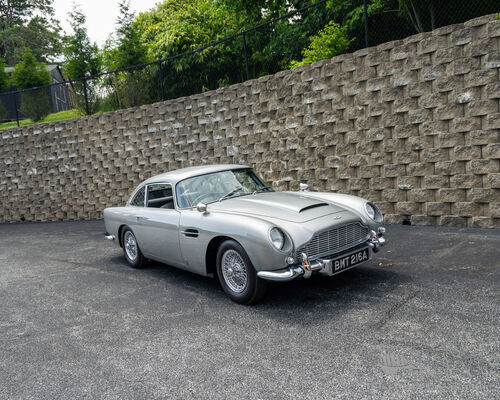
2020 Aston Martin DB5 Goldfinger Continuation | RM Sotheby's | The Monterey Auction
To Be OFFERED AT AUCTION at RM Sothebys' The Monterey Auction event, 13 - 15 August 2026. $1,000,000 - $1,500,000 USD One of 25 examples co..
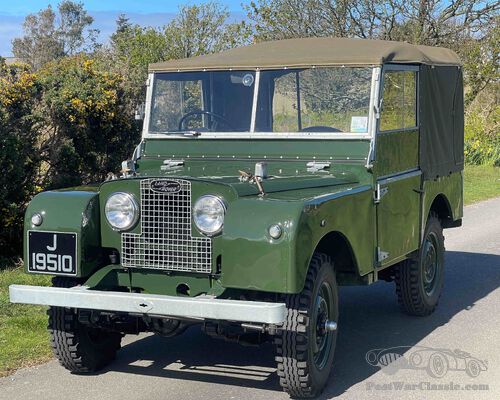
1952 Land Rover Series 1
Specifiche tecniche:Marca e modello: Land Rover Series !Anno: 1952Targa: immatricolata a Jersey..
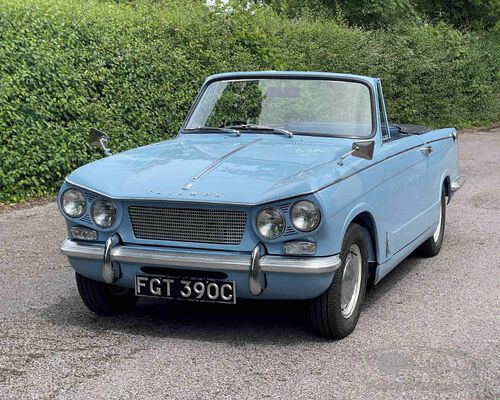
Triumph Vitesse 6 Convertible
Technical SpecificationsMark & Model: Triumph Vitesse 6 ConvertibleYear: 1965Registration plate: UK registered