La rivista e il marketplace globale per gli appassionati di auto d’epoca, creati da appassionati.


Il mercato; tutte le auto prebelliche in vendita
Panoramica degli annunci correlati all'annuncio 1976 Alfa Romeo Sports Coupé by Autotecnica del Lario | RM Sotheby's | The Woodcote Park Auction
-

1962 Daimler DQ450 Majestic Major | Historics Auctioneers | Ascot Racecourse | 15th May 2021
Motor Sport magazine described the Daimler Majestic Major as having sportscar performance and indeed it did, remaining stable at over a reported 120mph. The coachwork was built by a subsidiary company, however, called Carbodies at a different pace than other cars at Browns Lane on another production line that was ‘hand-moved’ in order to maintai.. -
1968 Chevrolet Camaro SS Convertible | Historics Auctioneers | Ascot Racecourse | 15th May 2021
The Chevrolet Camaro was General Motors’ response to the highly successful Ford Mustang pony car. The first Camaro that appeared on sale in September 1966 was a 2+2 two door available with a coupé or convertible body, sharing the chassis and many other parts from the Pontiac Firebird. A wide range of engine options included six and eight cylinde.. -
1965 Ford Mustang GT Fastback | Historics Auctioneers | Ascot Racecourse | 15th May 2021
The Mustang GT version was introduced as the ‘GT Equipment Package’ and included a V8 engine and included grille-mounted fog lamps, rocker-panel stripes, bumper exit exhausts and disc brakes. In the interior, the GT option added a different instrument panel that included a speedometer, fuel gauge, temperature gauge, oil pressure gauge and amp me.. -
1966 Triumph TR4A IRS | Historics Auctioneers | Ascot Racecourse | 15th May 2021
Produced between 1961 and 1967, the Triumph TR4 combined a new, modern, and aggressive body design by famed Italian stylist, Giovanni Michelotti, with the basic chassis of the previous TR3A. The TR4 also improved passenger comfort with wind-up windows, face-level ventilation, and an optional hardtop. When equipped with the optional overdrive, th.. -
1960 Alfa Romeo Giulietta Sprint Speciale by Bertone | Historics Auctioneers | Ascot Racecourse | 15th May 2021
The stunning Sprint Speciale coupé directly descended from Carrozzeria Bertone’s brilliant Bertone Aerodynamica Technica (BAT) design studies of the mid-1950s. With its extremely low drag coefficient of 0.29, it was aimed at competition, and a limited number were produced to meet FIA homologation rules. The Speciale utilised lightweight construc.. -
1967 Alfa Romeo Spider 1600 Duetto | Historics Auctioneers | Ascot Racecourse | 15th May 2021
The Alfa Romeo Spider 1600, to give it its official factory name, was manufactured during 1966 and 1967. The name 'Duetto' came about from a competition held by Alfa Romeo to distinguish the car from its Giulia 105 series stable mates, the Coupé and Berlina, and was accepted for its reference to the two-seat layout. The Duetto name only applied .. -
1969 Jaguar 420 G | Historics Auctioneers
The Jaguar Mk. X, later renamed the Jaguar 420G was the top of the range saloon built by the British manufacturer primarily aimed at the US market. The unitary construction body-shell was codenamed ‘Zenith’ during development and this floor pan continued in production long after production ended. The interior was the last Jaguar with abundant stand.. -
1966 Jaguar E-Type Series I Roadster (4.2 Litre) | Historics Auctioneers
Introduced in 1961 at the Geneva Motor Show, the Jaguar E-Type’s striking presence dazzled crowds and upended the automotive world. The British car was handsomely designed by a team led by the imaginative Malcom Sayer with the blessing of Jaguar founder Sir William Lyons. The success of the E-Type was due, in no small part, to its stunning looks, h.. -
1970 Alfa Romeo 1750 GT Veloce | Historics Auctioneers
The first of Alfa Romeo’s Bertone styled coupés, the 1.6 litre Giulia Sprint GT, was launched in 1963. Mechanically the stylish new 2+2 was much the same as the Giulia TI sports saloon, featuring a five-speed manual gearbox, independent front suspension, coil-spring live rear axle and disc brakes all round. A 1300 model, the GT Junior, arrived in 1.. -
1961 Jaguar E-Type Series I Roadster 'Flat Floor' | Historics Auctioneers
Introduced in 3.8-litre form in May 1961, the Jaguar E-Type caused a major sensation when it appeared, with instantly classic lines and 150mph top speed. While, inevitably, the car's stupendous straight-line performance and gorgeous looks grabbed the headlines, there was a lot more to the E-Type beneath the skin. The design owed much to that of the..


In primo piano
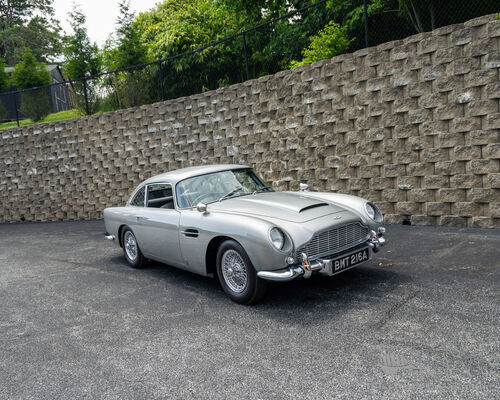
2020 Aston Martin DB5 Goldfinger Continuation
Offerta all'asta da RM Sotheby's durante The Monterey Auction, 13-15 agosto 2026. Stima: 1.000.000-1.500.000 USDUno dei s..
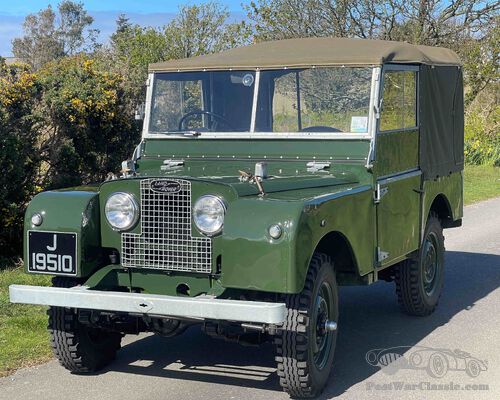
1952 Land Rover Series 1
Specifiche tecniche:Marca e modello: Land Rover Series !Anno: 1952Targa: immatricolata a Jersey..
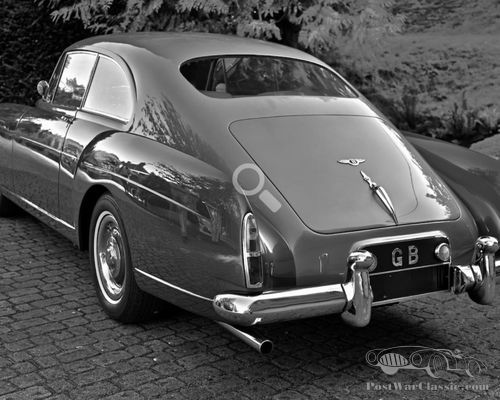
1957 Bentley S1 Fastback di H.J. Mulliner.
1957 Bentley S1 Fastback by H.J. Mulliner.Vettura recentemente restaurata e premiata, in condizioni pari al nuovo. Si tratta di un esemplare..