La rivista e il marketplace globale per gli appassionati di auto d’epoca, creati da appassionati.


Il mercato; tutte le auto prebelliche in vendita
Panoramica degli annunci correlati all'annuncio 1976 Alfa Romeo Sports Coupé by Autotecnica del Lario | RM Sotheby's | The Woodcote Park Auction
-

1962 Austin J40 Pedal Car | Windsor View Lakes Sale - July 2023 | Historics Auctioneers
The Austin J40 pedal car is a miniature replica of the Austin A40 motor car produced by the Austin Motor Company in the 1950s. The J40 was designed for children aged between three and six years old, and it quickly became a popular toy car in post-war Britain. The car was made from heavy-gauge steel. The J40 was available in a range of colours, incl.. -
1968 Ford Cortina Mk. II 1600GT Crayford | Windsor View Lakes Sale - July 2023 | Historics Auctioneers
The second incarnation of the Cortina was designed by Roy Haynes and launched on 18th October 1966, four years after the original Cortina. Although the launch was accompanied by the slogan 'New Cortina is more Cortina'. Improvements included a better turning circle, softer suspension, self-adjusting brakes and clutch, together with the availability.. -
1968 MG C GT | Windsor View Lakes Sale - July 2023 | Historics Auctioneers
The MGC was the first 'high performance' version of the MGB platform, as had been the plan from early in the design stages of the MGB. A range of ‘V’ engines were tested but did not make it to production. The MGC was very much more than just a tuned MGB and in fact was a completely re-engineered car, although still retaining many visual connections.. -
1965 Ford Anglia 105E Rally Car | Windsor View Lakes Sale - July 2023 | Historics Auctioneers
When the Anglia 105E was introduced in September 1959, Ford switched to an overhead valve engine for its smallest family saloon. The 997cc four-cylinder unit proved to be a very reliable unit and lent itself to being tuned, hence the success in Formula 3 and Formula Junior. The suspension retained the McPherson strut at the front and live rear axle.. -
1966 Ford Lotus Cortina Mk. I | Windsor View Lakes Sale - July 2023 | Historics Auctioneers
There are few road and racing cars more instantly recognised than a Lotus Cortina, with its green arrow pointing its way so clearly towards success. Using Ford's eponymous two-door saloon and Colin Chapman's fabulous twin-cam engine, the marriage was a match made in heaven. Chapman commissioned Harry Mundy, he of Coventry Climax fame, to come up wi.. -
1969 Fiat Abarth 595 Evocation | Windsor View Lakes Sale - July 2023 | Historics Auctioneers
It is not so often that a motorcar surprises us. The Fiat 500 surely needs little introduction, suffice to say that this compact car became ripe for tuning with Abarth leading the way in converting them into successful fast road and racing cars of the period. With genuine Abarth models now seeing some extraordinary prices, it is no surprise that ma.. -
1968 Jaguar E-Type Series I 2+2 Coupé | Windsor View Lakes Sale - 22 July 2023 | Historics Auctioneers
The E-Type design owed much to that of the racing D-Type, a monocoque tub forming the main structure while a tubular spaceframe extended forwards to support the engine. Conceived and developed as an open sportscar, the Jaguar E-Type debuted at the Geneva Motor Show in March 1961 in coupé form. The car caused a sensation, spontaneous applause breaki.. -
1969 Rolls-Royce Silver Shadow Fixedhead Coupé by MPW | Windsor View Lakes Sale - July 2023 | Historics Auctioneers
Rolls-Royce Motors formed Mulliner Park Ward by the 1961 merger of two Rolls-Royce subsidiaries: Park Ward of Willesden, London, a Rolls-Royce subsidiary since 1939 and H. J. Mulliner & Co. of Chiswick, a Rolls-Royce subsidiary since 1959. Mulliner Park Ward continues to operate as the vehicle customisation division of Bentley Motors Limited, t.. -
1962 Jaguar Mk. X | Windsor View Lakes Sale - July 2023 | Historics Auctioneers
The Jaguar Mk. X was the top of the range saloon car built by the British manufacturer primarily aimed at the United States market. The unitary construction bodyshell was codenamed 'Zenith' during development and this floor pan continued in production long after Mk. X production ended, as the DS420 Limousine. The interior was the last Jaguar with a.. -
1969 Mercedes-Benz 280 SL Pagoda | Windsor View Lakes Sale - July 2023 | Historics Auctioneers
Mercedes-Benz have produced some of the most famous sporting classic cars the world has ever seen, no more so than the 280 SL Pagoda dating back to the 1960’s. With three engine options on offer, the most collectible was, by far, the 2.8 litre model. Not only BMW, France’s TGV and Citroën, Paul Bracq was the designer responsible for the skilful lin..



In primo piano
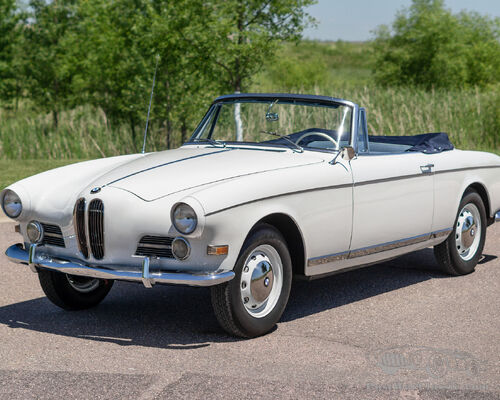
1957 BMW 503 Cabriolet (V8) – 1 di 13 costruiti per il mercato USA – #Esemplare matching
1957 BMW 503 Cabriolet Serie 1V8 in alluminio originale # MatchingCarrozzeria in alluminio originale con stampigliature di fab..
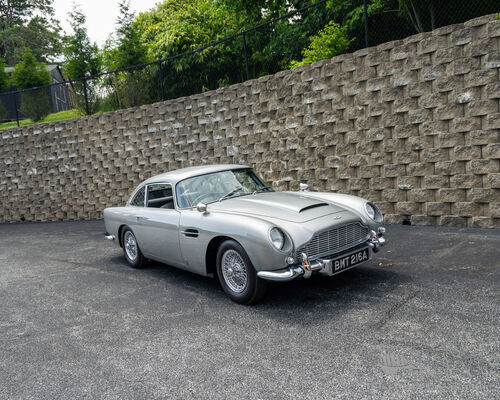
2020 Aston Martin DB5 Goldfinger Continuation | RM Sotheby's | The Monterey Auction
To Be OFFERED AT AUCTION at RM Sothebys' The Monterey Auction event, 13 - 15 August 2026. $1,000,000 - $1,500,000 USD One of 25 examples co..
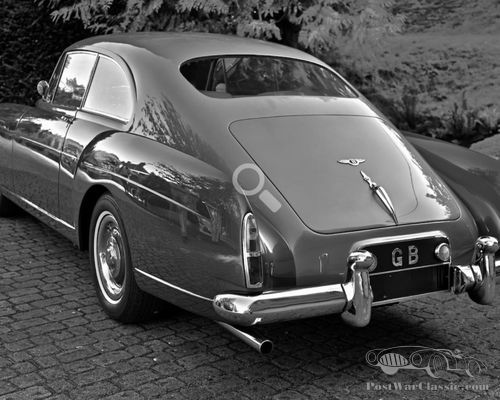
1957 Bentley S1 Fastback by H.J. Mulliner.
1957 Bentley S1 Fastback by H.J. Mulliner.A freshly restored award winning car in like new condition. A later car with Power assited steerin..