La rivista e il marketplace globale per gli appassionati di auto d’epoca, creati da appassionati.


Il mercato; tutte le auto prebelliche in vendita
Panoramica degli annunci correlati all'annuncio 1976 Alfa Romeo Sports Coupé by Autotecnica del Lario | RM Sotheby's | The Woodcote Park Auction
-

1963 Ford Cortina Mk. I 1500 GT | Historics Auctioneers
The Cortina was Ford's mass-market compact car and sold extremely well. It was produced in five generations, the Mk. I through to the Mk. V although officially the last one was called the Cortina 80. With variants of the Cortina reaching sales of over one million, each successive model proved more popular than its predecessor. Such was its fame in .. -
1963 Jaguar E-Type Series I Roadster (3.8 litre) | Historics Auctioneers
Introduced in 1961, the Jaguar E-Type caused a sensation when it appeared with its instantly classic lines and 150mph top speed. While, inevitably, the car's stupendous straight-line performance and gorgeous looks grabbed the headlines, there was a lot more to the E-Type beneath the skin. The newcomer's design owed much to that of the racing D-Type.. -
1968 Volvo P1800S | Historics Auctioneers
In December 1957, the first handbuilt P1800 prototype was driven to the headquarters of Karmann. Volvo had hoped that Karmann would be able to take on the tooling and building of the P1800 and they were ready to build it which meant that the first cars could hit the market as early as December 1958. But in February, Karmann's most important custome.. -
1963 Land Rover Series IIA | Historics Auctioneers
The Land Rover Series IIA is considered by many to be the hardiest Series model constructed. It was whilst the Series IIA was in production that sales of utility Land Rovers reached their peak, in 1969-70, when sales of over 60,000 Land Rovers a year were recorded. Compare that with sales of the Defender in recent years which have been around th.. -
1961 Rover P4 100 Saloon | Historics Auctioneers
Manufactured from 1949 through to 1964, the Rover P4 series of cars were produced in several different models; the Rover 60, 75, 80, 90, 95 100, 105 and 110. Apart from the 60 and 80, the models all had inline six-cylinder engines with overhead inlet valves and side exhaust valves. Various transmissions were used including either a manual overdrive.. -
1962 Bentley S3 | Historics Auctioneers
The last Bentley to be built on a separate chassis, in 1962, saw the introduction of the Bentley S3 factory bodied, standard steel saloon and, at first glance, it would appear that the all new S3 was merely an S2 with different headlamps. The introduction of the twin headlamps was clearly the most obvious change, but the differences did not end the.. -
1967 Jaguar Mk. II (3.8 Litre) Saloon | Historics Auctioneers
Launched in 1959, the Jaguar Mk. II offered a noticeably improved driving experience over its predecessor courtesy of revised front suspension geometry, widened rear suspension and four-wheel disc brakes. Improvements were achieved by increasing the cabin glass area by almost 20%, while narrower front and central body pillars gave the car a more re.. -
1969 Jaguar 420 G *WITHDRAWN* | Historics Auctioneers
DUE TO CIRCUMSTANCES BEYOND OUR CONTROL, THIS LOT HAS BEEN WITHDRAWN FROM THE AUCTIONThe Jaguar Mk. X, later renamed the Jaguar 420G was the top of the range saloon built by the British manufacturer primarily aimed at the US market. The unitary construction body-shell was codenamed ‘Zenith’ during development and this floor pan continued in product.. -
1969 Mercedes-Benz 280 SL Pagoda | Historics Auctioneers
In 1963, Mercedes-Benz debuted an all-new roadster to replace the 190 SL and 300 SL - the 230 SL. The 230 SL 'Pagoda' was a stunning Paul Bracq designed two-seat convertible that followed Mercedes' new design language, featuring crisp lines and upright headlights. To save on weight, the bonnet, doorskins, boot lid, and tonneau cover were all compos.. -
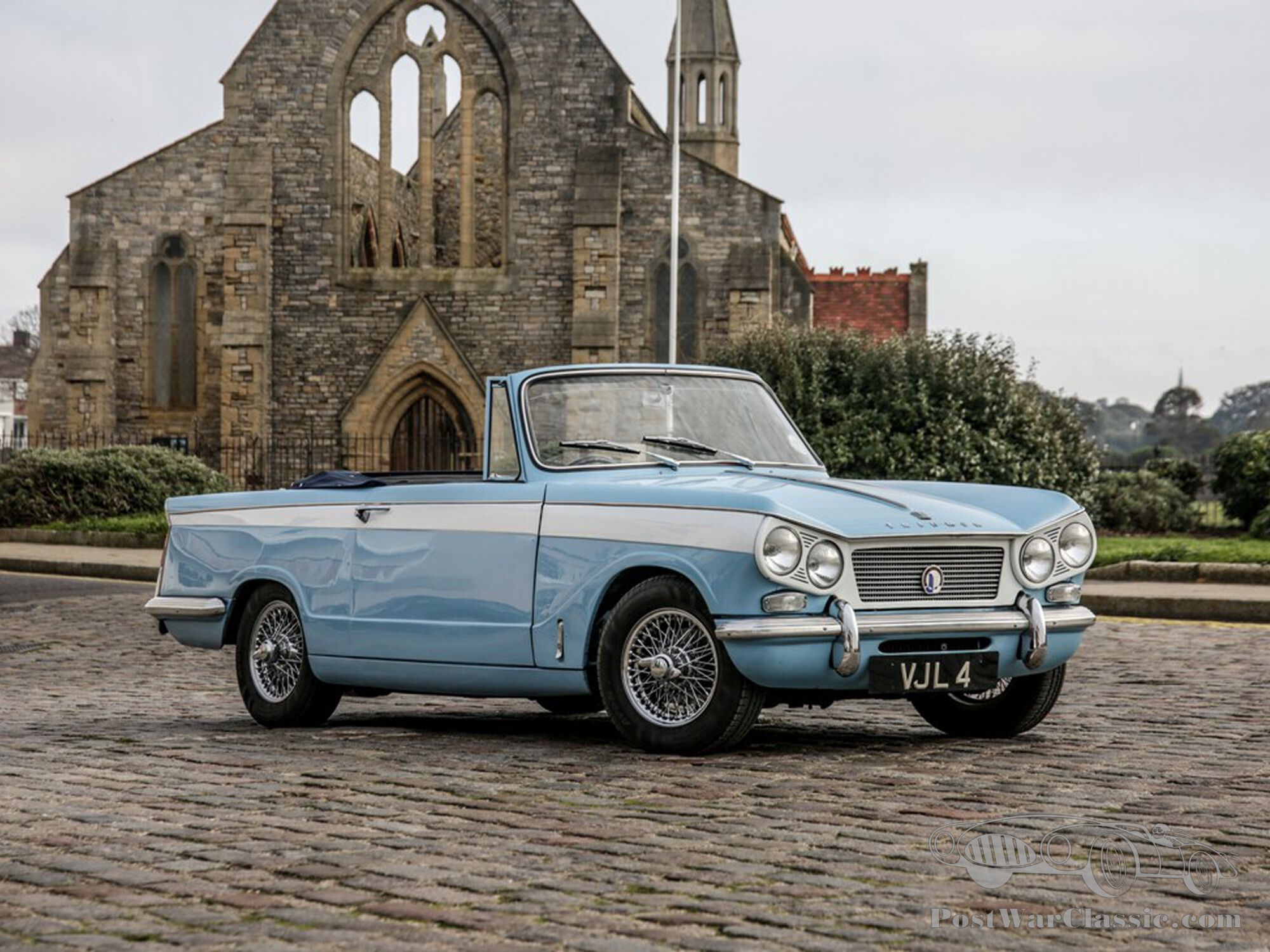
1963 Triumph Vitesse Convertible | Historics Auctioneers
Introduced in May 1962, the Triumph Vitesse was a six-cylinder sports saloon based upon the four-cylinder powered Triumph Herald. Having designed the Herald, Giovanni Michelotti made revisions to the design evolving it into the Vitesse and resulting in the ‘slanted’ four-headlamp design. This is a superb 1.6 litre example of one of the very first ..




In primo piano
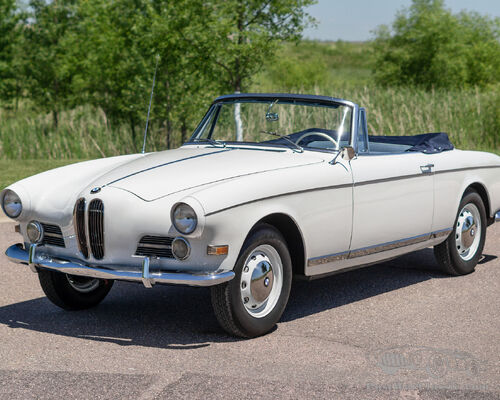
1957 BMW 503 Cabriolet (V8) – 1 di 13 costruiti per il mercato USA – #Esemplare matching
1957 BMW 503 Cabriolet Serie 1V8 in alluminio originale # MatchingCarrozzeria in alluminio originale con stampigliature di fab..
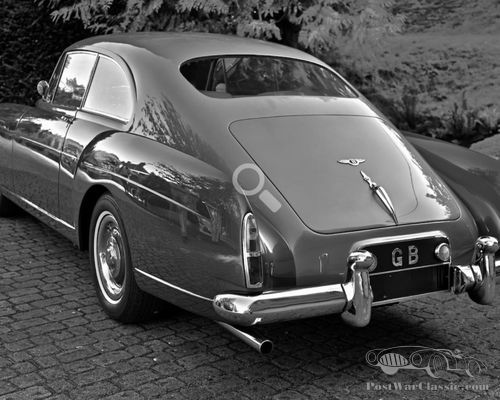
1957 Bentley S1 Fastback by H.J. Mulliner.
1957 Bentley S1 Fastback by H.J. Mulliner.A freshly restored award winning car in like new condition. A later car with Power assited steerin..
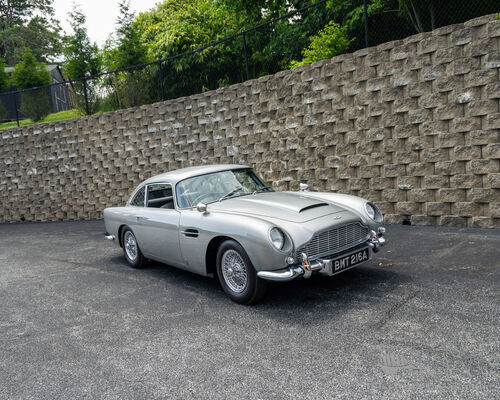
2020 Aston Martin DB5 Goldfinger Continuation | RM Sotheby's | The Monterey Auction
To Be OFFERED AT AUCTION at RM Sothebys' The Monterey Auction event, 13 - 15 August 2026. $1,000,000 - $1,500,000 USD One of 25 examples co..