La rivista e il marketplace globale per gli appassionati di auto d’epoca, creati da appassionati.


Il mercato; tutte le auto prebelliche in vendita
Panoramica degli annunci correlati all'annuncio 2020 Ferrari PORTOFINO TAILOR MADE
-

1971 Ferrari Dino 246 GT | Broad Arrow Auctions | Monterey Jet Center | 13-14 August 2025
Chassis No. 03058 Engine No. 0009031 Ferrari introduced the Dino 246 GT in 1969 as the next evolution of its first mid-engine, V6-powered road car, marrying a 2.4-liter Formula Two-bred engine with Pininfarina-styled coachwork. By mid 1971, the "E Series" embodied the most refined evolution of the 246 GT, featuring enlarged dual-Weber .. -
2004 Ferrari 360 Modena | Broad Arrow Auctions | Monterey Jet Center | 13-14 August 2025
Chassis No. ZFFYU51A740137455 For decades, Enzo Ferrari remained steadfast in his belief that road cars bearing his name should be powered exclusively by twelve cylinders. Yet the immense popularity of the V6-powered, Dino-badged 206 and 246 GT proved there was significant demand for lighter, mid-engined models from Maranello. That momentum .. -
1965 Ferrari 275 GTB | Broad Arrow Auctions | Monterey Jet Center | 13-14 August 2025
Chassis No. 07723 Engine No. 07723 Transmission No. 357 Lights shone on a familiar silhouette at the 1964 Paris Salon-the curves and long flowing front of Ferrari's latest grand tourer echoing that of the fabled 250 GTO. Styled by Pininfarina, the 275 GTB's beautifully proportioned coachwork disguised a number of technical firsts.. -
2006 Ferrari F430 Spider | Broad Arrow Auctions | Monterey Jet Center | 13-14 August 2025
Chassis No. ZFFEW59AX60147045 Developed alongside the closed F430 berlinetta, the F430 Spider debuted in 2005 embodying many of the same Formula One–derived technologies while adding an open-air element to the line. Its electrically operated folding soft top added just 154 pounds, costing only a tenth of a second in the zero-to-62 mph sprint.. -
2010 Rolls-Royce Phantom | Broad Arrow Auctions | Monterey Jet Center | 13-14 August 2025
Chassis No. SCA681S57AUX09074 The Rolls-Royce Phantom is celebrated as the car that brought Rolls-Royce into the 21st century and reinstated the marque at the apex of luxury. Introduced in 2003 as the first new Rolls-Royce since BMW's acquisition of the famed automaker, it was also the first model given the prestigious Phantom name since 199.. -
1988 Lamborghini Countach 5000 QV | Broad Arrow Auctions | Monterey Jet Center | 13-14 August 2025
Chassis No. ZA9CA05A0JLA12234 Engine No. 1449 The Lamborghini Miura, the world's first supercar, was a nearly insurmountable act to follow. Its successor needed to be a forward-thinking purpose-built sports car, oozing futuristic design cues and cutting-edge engineering. Under Lamborghini's orders, no holds were barred for the new "LP1.. -
1972 Ferrari Dino 246 GT | Broad Arrow Auctions | Monterey Jet Center | 13-14 August 2025
Chassis No. 01776 Engine No. 0007429 Transmission No. 851 M While Ferrari's groundbreaking mid-engine six-cylinder street sports car, the Dino 246 GT, was built as a production car by Ferrari's standards, the total number built was minuscule by virtually any other standard-only about 3,500 total cars in five production years were.. -
1972 Ferrari Dino 246 GTS | Broad Arrow Auctions | Monterey Jet Center | 13-14 August 2025
Chassis No. 03900 Engine No. 0009729 Transmission No. 874 E The Ferrari Dino 246 GT in its late "E-Series" form represented the final, most refined chapter of the Dino lineage. Produced from mid-1971 to 1974, the E Series saw incremental upgrades such as Weber 40 DCNF/13 carburetors (compared to the F/7 units on earlier series) i.. -
1999 Chrysler Viper GTS-R ORECA Works | Broad Arrow Auctions | Monterey Jet Center | 13-14 August 2025
Chassis No. C20 Using the word dominant to describe the Chrysler Viper GTS-R's run in the late 1990s FIA GT Championship might be an understatement. In both the 1997 and 1998 seasons, the two-car ORECA-run Chrysler Viper GTS-Rs were classed in GT2 and regularly outperformed the ageing 911 GT2s run by top teams like Roock Racing, Freisinger, .. -
1979 Ferrari 512 BB | Broad Arrow Auctions | Monterey Jet Center | 13-14 August 2025
Chassis No. 27061 Engine No. 00388 The Ferrari 512 Berlinetta Boxer represented a significant evolution of Ferrari's mid-engine supercar formula, building upon the foundation laid by the 365 GT4 BB. Engine displacement grew to 4,942 cc, and as a result, Ferrari opted to abandon its traditional practice of naming models after their cyli..



In primo piano
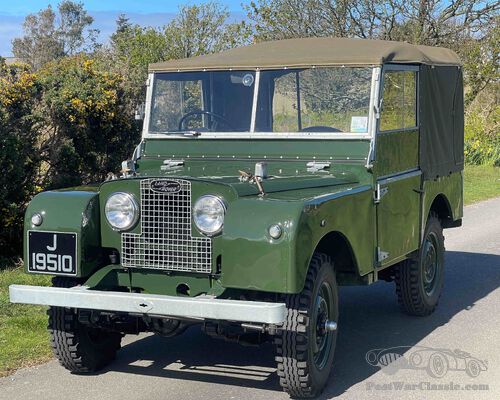
1952 Land Rover Series 1
Specifiche tecniche:Marca e modello: Land Rover Series !Anno: 1952Targa: immatricolata a Jersey..
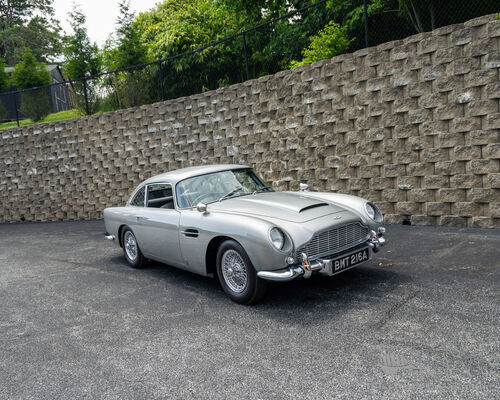
2020 Aston Martin DB5 Goldfinger Continuation
Offerta all'asta da RM Sotheby's durante The Monterey Auction, 13-15 agosto 2026. Stima: 1.000.000-1.500.000 USDUno dei s..
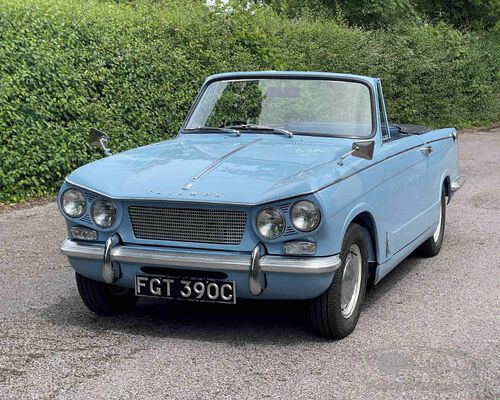
Triumph Vitesse 6 Convertible
Specifiche tecnicheMarca e modello: Triumph Vitesse 6 ConvertibleAnno: 1965Immatricolazione: Regno UnitoNumero d..