La rivista e il marketplace globale per gli appassionati di auto d’epoca, creati da appassionati.


Il mercato; tutte le auto prebelliche in vendita
Panoramica degli annunci correlati all'annuncio 2022 Lamborghini Countach LPI 800-4
-

2006 Jaguar XK8 Coupé | Historics Auctioneers
Jaguar cars today are designed in Jaguar Land Rover's engineering centres at the Whitley plant in Coventry and Gaydon in Warwickshire, whilst manufacturing takes place in Jaguar's Castle Bromwich assembly plant in Birmingham. The Jaguar XK series was introduced at the Geneva Motor Show on 5th March 1996; the first generation of the series being the.. -
1997 Rover Mini Cooper | Historics Auctioneers
John Cooper was well known for his involvement, with his father Charles, in developing the post-war rear engine single seater 500cc race cars that ran amok and beat the larger front engine cars of the period. John is also later renowned for his development of the iconic Mini with the Mini Coopers cleaning up in high profile race and rally events in.. -
1983 Land Rover Series III 88” Country Safari | Historics Auctioneers
The iconic Land Rover Series I, II, and III are commonly referred to as ‘Series’ Land Rovers to distinguish them from later models. These easily recognisable vehicles were produced by the world famous midland manufacturer from 1948 until 1985. Land Rover state that 70% of the vehicles are still in use today. A superb achievement for any motor manuf.. -
1998 Porsche 996 C2 | Historics Auctioneers
The Porsche 996 is the internal designation for the Porsche 911 model manufactured and sold between 1998 and 2005. On its debut, the 996 featured the most significant changes to the Carrera model since its 1963 introduction, namely the water-cooled engine replacing the previously air-cooled unit. Progressively stringent noise regulations, environme.. -
1991 Ferrari 348 TS | Historics Auctioneers
The Ferrari 348 was a mid-engined, rear wheel drive V8 powered two-seater replacing the 328 in 1989 and continuing until 1995. Badged 348 TB for the coupé (Berlinetta) and 348 TS (Spider) for the targa versions, it features a naturally aspirated 3.4 litre version of the quad-cam, four valve per cylinder engine which was originally found in the 288G.. -
1999 Aston Martin DB7 Vantage Coupé | Historics Auctioneers
Regarded by many as one of the world's most beautiful cars when released in 1994, the DB7 received many subtle but effective changes over its ten year life to complement the elegant body design. Originally designed by Ian Callum to be both beautiful and practical and encompass all the unmistakable DB styling cues, it was initially deemed a little u.. -
1988 Lotus Esprit S3 | Historics Auctioneers
The 1987 Lotus Esprit benefitted from a far reaching restyle by Peter Stevens. Out went many of the sharp lines, to be replaced by a more organic aero look. It worked, too - the Esprit certainly looked like a contemporary product when launched, and still looks timeless today. Originally, the name Kiwi was proposed for the Esprit but, in keeping wit.. -
1990 Jaguar XJS Convertible (5.3 Litre) | Historics Auctioneers
In 1975, the Jaguar E-Type finally gave way to an all new and more efficient Jaguar, the Jaguar XJS. This new luxury grand tourer, although never quite having the same sporting image as the E-Type, was actually more aerodynamic with the final example leaving the production line on 4th April 1996. At that stage, 115,413 units had been manufactured d.. -
2000 Lotus 340R | Historics Auctioneers
Given the success of its long-running Seven, still manufactured by Caterham and much copied by others, perhaps the most surprising thing is not that Lotus had another stab at building a stripped-down, back-to-basics sportscar, but that it took them so long. First shown as a concept car at the 1998 British International Motor Show, the 340R uses the.. -
2016 Maserati Quattroporte Shooting Brake | Historics Auctioneers
In 1963, Maserati made a remarkably bold move, introducing the first ever luxury sports saloon.It took a successful V8 motor racing engine, fitted it to a beautifully designed luxury saloon and then proudly presented its creation to the world. At launch, the Maserati Quattroporte was the fastest saloon car in the world. Fast forward some 46 years ..



In primo piano
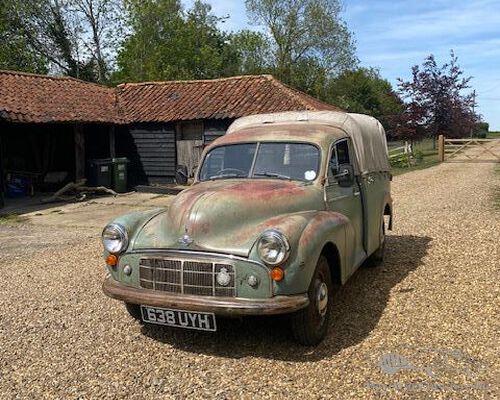
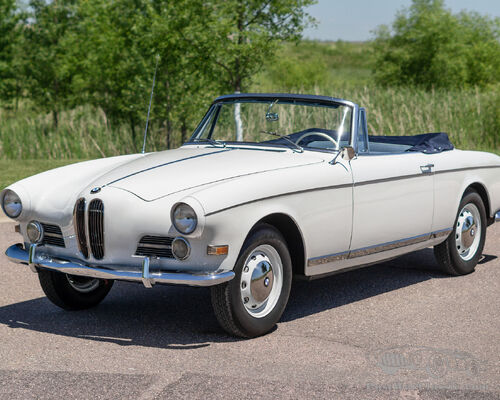
1957 BMW 503 Cabriolet (V8) – 1 di 13 costruiti per il mercato USA – #Esemplare matching
1957 BMW 503 Cabriolet Serie 1V8 in alluminio originale # MatchingCarrozzeria in alluminio originale con stampigliature di fab..
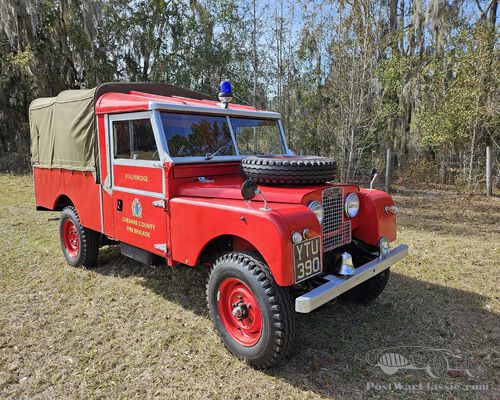
1957 Series 1 Land Rover Fire Engine + Coventry Climax Godiva Fire Pump
Betsy was used by Cheshire Fire Service (UK) from 1957 to 1975. She was based at Hazel Grove and Stalybridge Fire stations. She comes with an exten..