La rivista e il marketplace globale per gli appassionati di auto d’epoca, creati da appassionati.


Il mercato; tutte le auto prebelliche in vendita
Panoramica degli annunci correlati all'annuncio 1975 BMW 3.0 CSi | The Quail Auction 2026
-

1974 Jaguar E-Type Series III Roadster | Historic Auctioneers | Farnborough International | 11th May 2024
The Jaguar E-Type was ten years old and needed new life. History repeated itself and it was a huge success when Jaguar debuted its robust new engine in a sports car instead of the saloon for which it was designed. Despite its sports-car heritage, Jaguar depended on saloon vehicles for its survival and had developed its twelve-cylinder engine to pow.. -
1971 Porsche 911 ST Specification | Historic Auctioneers | Farnborough International | 11th May 2024
The original 911ST has an interesting history, probably more so due to its genuine competition lineage. During the era of early 911 production, Porsche were continuously developing their road cars for competition, and with great success. Keen to see customers using their cars in the same manner, they created a series of performance accessories that.. -
1973 Rolls-Royce Corniche Convertible | Historic Auctioneers | Farnborough International | 11th May 2024
Introduced in March of 1971, the Corniche was a revised version of the H J Mulliner, Park Ward-bodied two-door variants of the Rolls-Royce Silver Shadow and Bentley T-Series saloons, themselves notable as the Crewe factory's first unitary-construction cars. They featured the finest engineered technologies of the day, such as independent suspension,.. -
1981 BMW M535i (E12) | Historic Auctioneers | Farnborough International | 11th May 2024
When the BMW M535i was launched in 1980, it brought worlds together which had hitherto been separate: competition-like driving, comfort and elegance all in the dimensions of a top-of-the-range limousine. The Getrag gearbox connects to the rear axle and limited-slip differential and the braking system has been upgraded to discs all round with the su.. -
1972 Ferrari Dino 246GT | Historic Auctioneers | Farnborough International | 11th May 2024
The Dino, named in honour of Enzo Ferrari’s son, was a brand for V6 engined Ferraris and the project that Alfredo ‘Dino’ Ferrari worked on before he died tragically of muscular dystrophy at just 24 years old. In order to homologate Ferrari’s Formula Two entry in 1966, the FIA requested that 500 production cars were produced using the same V6 unit a.. -
1985 BMW M635 CSi | Historic Auctioneers | Farnborough International | 11th May 2024
The BMW M635CSi was the brainchild of BMW’s Motorsport department and arrived to the market in 1984. Karmann manufactured the early 6 Series BMWs from launch in 1976 before BMW took production in-house. The engine was a development of the M1 supercar's 3453cc, 24 valve, six-cylinder unit producing 286bhp, the increased power necessitating chassis i.. -
1977 Jaguar Series II XJC V12 | Historic Auctioneers | Farnborough International | 11th May 2024
The XJ series of motorcars were the mainstay of Jaguar cars since 1968 and, in fact, was the last motorcar to have any input by Sir William Lyons, its founder. After the series I and II, a relatively short run of two-door XJ coupés with a pillarless hardtop body called the XJ-C were built between 1975 and 1978. The car was actually launched at the .. -
1974 Jensen Interceptor Convertible | Historic Auctioneers | Farnborough International | 11th May 2024
The Jensen Interceptor was a grand touring car produced between 1966 and 1976. One of the most coveted versions of this car was the 1974 Jensen Interceptor Convertible, which combined the sleek design and powerful engine of the Interceptor with the open-air experience of a convertible. Under the bonnet, the Jensen Interceptor Convertible featured a.. -
1973 Datsun 240Z Samuri | Historic Auctioneers | Farnborough International | 11th May 2024
The Datsun 240Z, (latterly the 260Z and 280Z) was the first generation of 'Z' two-seat coupés, produced by Nissan in Japan from 1969 to 1978. Its dramatic looks owed a considerable amount to a 1960's styling concept drawn by Count Albrecht Goertz for Datsun, presumably at a time when they were considering ways to break into the European sports car .. -
1973 Lotus Elan Sprint FHC | Historic Auctioneers | Farnborough International | 11th May 2024
The Lotus Elan was introduced in 1962 and would go on to become one of the most successful sports cars of all time. It was the first Lotus road car to use the steel backbone chassis with fibreglass bodywork embodying Colin Chapman’s minimum weight design philosophy, weighing in at just 1,600Ibs. Powered by a 1558cc, twin-cam four-cylinder engine, t..



In primo piano
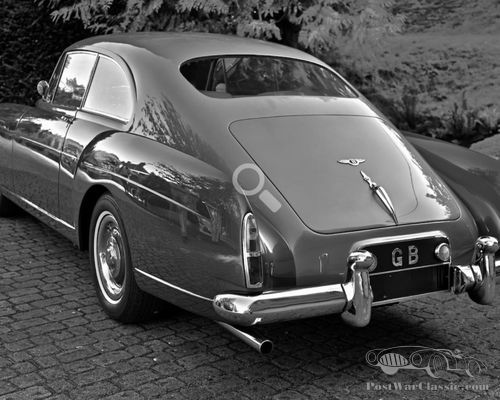
1957 Bentley S1 Fastback di H.J. Mulliner.
1957 Bentley S1 Fastback by H.J. Mulliner.Vettura recentemente restaurata e premiata, in condizioni pari al nuovo. Si tratta di un esemplare..
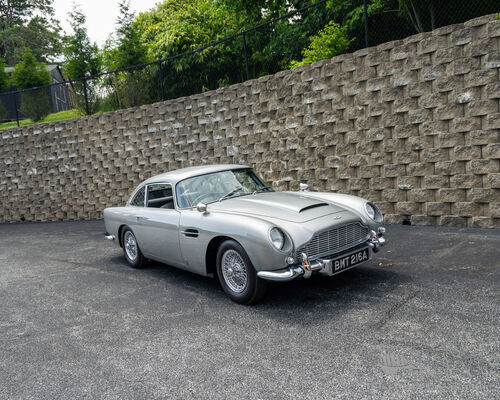
2020 Aston Martin DB5 Goldfinger Continuation
Offerta all'asta da RM Sotheby's durante The Monterey Auction, 13-15 agosto 2026. Stima: 1.000.000-1.500.000 USDUno dei s..
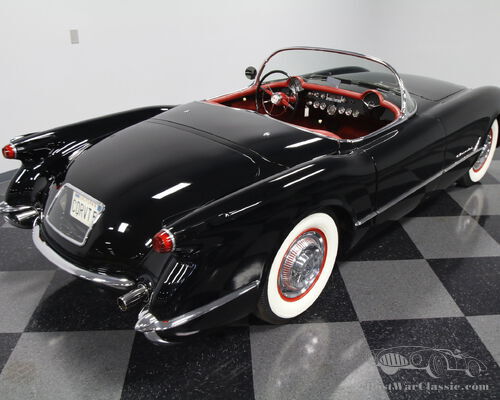
1954 Chevrolet Corvette C1
Fully restored 1954 C1 Corvette in Black. Stunningly beautiful car, feels like driving a sculptural work of Art. Known to be the oldest Corvette on t..