La rivista e il marketplace globale per gli appassionati di auto d’epoca, creati da appassionati.
La rivista e il marketplace globale per gli appassionati di auto d’epoca, creati da appassionati.


Filter
Faccia la sua scelta
- Automobile
-
Marca >>
-
Anno >>
-
- Motociclette
-
Anno >>
-
- Parti e altro
-
Marca dell'auto >>
-
Produttore >>
-
Categoria >>
-
Paesi


Electric cars and Jaguar's future: a reader writes

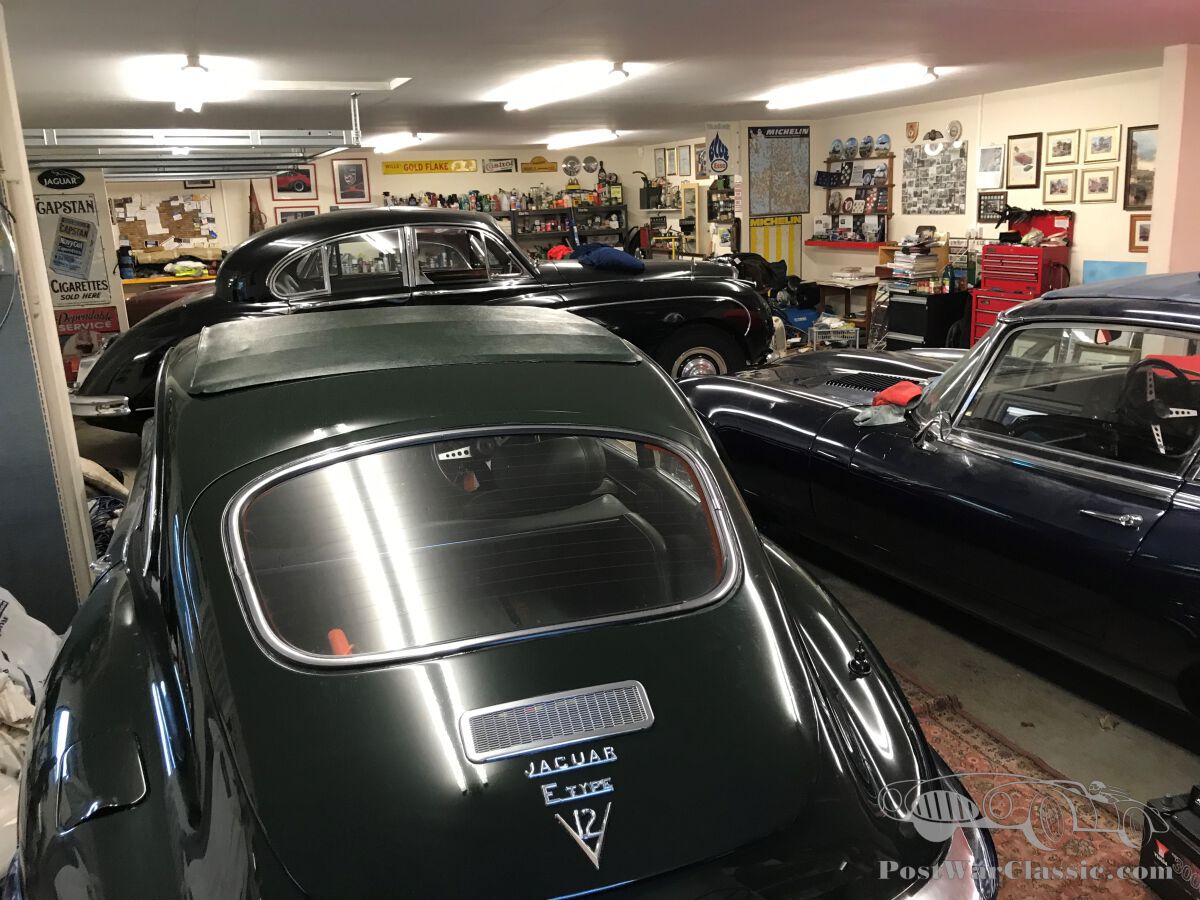


We were pleased to receive correspondence from a reader, who says:
Jaguar’s current aim is for pure electric cars – no hybrids or combustion engines, and no research into alternative fuel sources. Right now, electricity is at the forefront of everyone’s mind. It’s a global issue, with enormous rises in costs, and concerns about renewable energy. Already, there’s talk of possible power cuts.
Jaguar’s electric cars, like a mobile phone or computer, will have no longevity. Technology in these areas moves so fast that, as soon as one buys the latest mobile phone, computer, television and now Jaguar, it will be out of date. How is that ‘green’ thinking? And why will it be so? Because Jaguar alone is licensed to work on these vehicles. Unlike the brilliant cars Sir William Lyons developed over his lifetime, no one can buy an electric Jaguar and work on it themselves. When parts associated with the electric models become redundant, will Jaguar parts stockists keep a supply for years to come?
Thankfully, Formula One and other new car manufacturers are looking at alternative fuels, but if electric cars are to be the only mode of transport for us in the future, where is all the electricity to come from? How will that work in remote parts of the world, and Third World economies? How is the required infrastructure to be set up for people who live in apartment blocks, streets where cars line both sides of the road, any large place of work, be it office block or large warehouse? And this is only with cars; what about lorries, buses, farm vehicles and all other forms of road transport?
What will happen to all the industries connected with the internal combustion engine – all the manufacturers of parts, the part suppliers and stockists and all the non-dealer garages and mechanics. The list of people made unemployed would be endless.
Already, new cars are a nightmare for their technology. How much will you find in a new car that is totally unrequired? I’ll start you off with the electronic handbrake…
What car manufacturer goes to the trouble of asking what a customer wants from a new car? Where is the joy of motoring when all you want to do with a car yourself is done for you?
How sad it is that JLR’s management is insisting on this headlong course, which seems guaranteed to make the name Jaguar, like so many others, a thing of the past. But never mind – it looks after the elites for their short time in control. Like so many Prime Ministers we have experienced in recent years, who cares about the long-term future?
I will await, hopefully, many replies. Have I got it all wrong?
Geoff Gammon
See the whole letter here.
Our response
We are grateful for Geoff’s letter because it makes some very salient points which we would all do well to bear in mind as we are pushed towards an electric future. Obviously, Geoff appreciates that Jaguar’s hands are tied to some extent because it will not legally be allowed to market petrol- or diesel-powered cars in Britain after 2030, but we're sure most enthusiasts would like to see alternative combustion fuels developed.
Personally, we doubt Jaguar is risking its existence, because the majority of people who buy Jaguars today are not enthusiasts and have never heard of William Lyons. No enthusiast associates the new Chinese-made MGs with the spirit of Cecil Kimber, or bloated modern Land Rovers and Minis with their utilitarian progenitors, or the emasculated electric Ford Mustang Mach-E SUV with the Mach 1 muscle car of 1969, but that makes no difference to the company accountants: they serve the whims of the consumer, not the passions of the connoisseur.
We can’t answer all Geoff’s questions but, while we hope some of his concerns can be assuaged by people in the know, the truth behind some is unavoidably unpleasant. With regards to the mining of lithium and cobalt for lithium-ion batteries (which are also used in smartphones and other everyday devices), lithium extraction is associated with water contamination, resulting in fish and cattle dying due to the toxicity of streams. Cobalt, infamously, is extracted virtually by modern-day slavery, involving sending children as young as six down mines for as little as $2 a day. It is difficult to feel pious about a vegan leather interior when yaks were poisoned by toxic water and children died for the sake of the batteries.
At PWC, we maintain an open-mindedness towards new technology, but some healthy scepticism is appropriate here. Readers may question the relevance of cars of the present and future to a website primarily concerned with those of the past, but with the increasing popularity of electric classic-car conversions, we feel a duty to highlight both the humanitarian and practical considerations.
Comments are very much invited, especially those which shed light on this complicated situation.
Words: Zack Stiling
Pubblicato:
lunedì novembre 14th, 2022
Facebook
LinkedIn
Twitter
WhatsApp
Email
Copy
Commenti
Joop Terpstra
15 Novembre 2022, 11:50
Joop Terpstra
15 Novembre 2022, 10:59
If everybody drives let's say 1000-2000 miles per year with antique cars on petrol that will be no problem. So classic cars are not in danger, I guess and hope. We should enjoy while we still can. Happy driving to you all.
Per saperne di più
How sad to realise this now :-(