La rivista e il marketplace globale per gli appassionati di auto d’epoca, creati da appassionati.
La rivista e il marketplace globale per gli appassionati di auto d’epoca, creati da appassionati.


Filter
Faccia la sua scelta
- Automobile
-
Marca >>
-
Anno >>
-
- Motociclette
-
Anno >>
-
- Parti e altro
-
Marca dell'auto >>
-
Produttore >>
-
Categoria >>
-
Paesi


Ferraris and Camparis at the Hotel Beaurivage
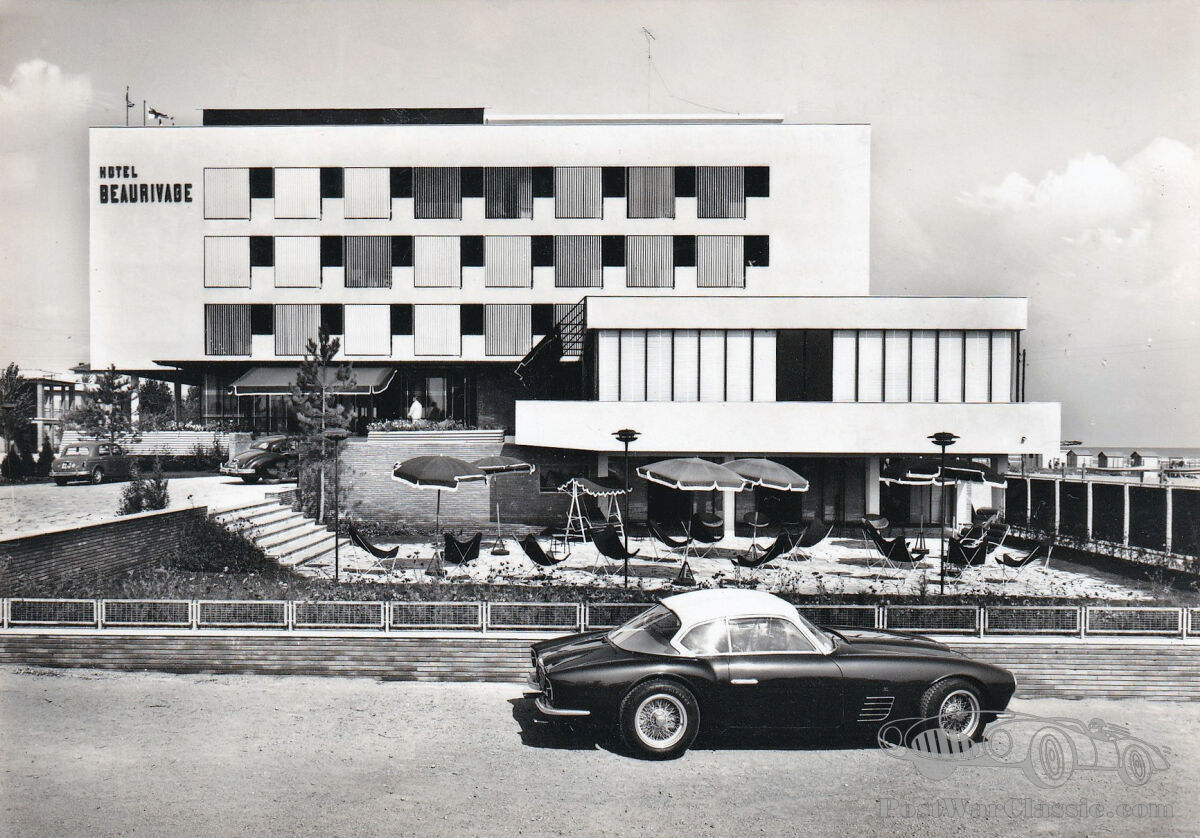


There are quite a few hotels named Beaurivage or Beau Rivage, probably more than there are early Zagato-bodied Ferraris. The number of collaborations between Italy’s most famous car manufacturer and what we may well call her most striking coachbuilder is limited. Until the 1960s there had been just a small handful. By the late 1940s, when Ferrari was formed, the Milanese coachbuilder had already clothed countless Alfa Romeos, Fiats and Lancias, but there had been just one single 166 coupé with the famous Panoramica body, characterized by its convex front and side windows which continued far upwards into the roof. This was later followed by a barchetta of the same type and a handful of variations on the 250 platform, including the 250 GTZ with its distinctive double-bubble roof.
We see a 250 GTZ right here, and probably the first of them: a car sold new to Milanese racer Vladimiro Galluzzi. Based on a 250 GT Tour de France and painted in silver-grey over dark blue, it’s a striking car indeed. Galluzzi is reputed not just to have raced it, but also to have entered it in a number of concours. Since the races he took part in all took place in his home country, it seems plausible that the Hotel Beaurivage where his car was spotted was in Italy, too, perhaps en route to or from one of his races or concours. There was a Concorso d’Eleganza di Rimini in the late 1950s, which would fit in perfectly with this. The Mk. VII Jaguar in the background fits in with the period, too, as does the Fiat 1100 next to it.
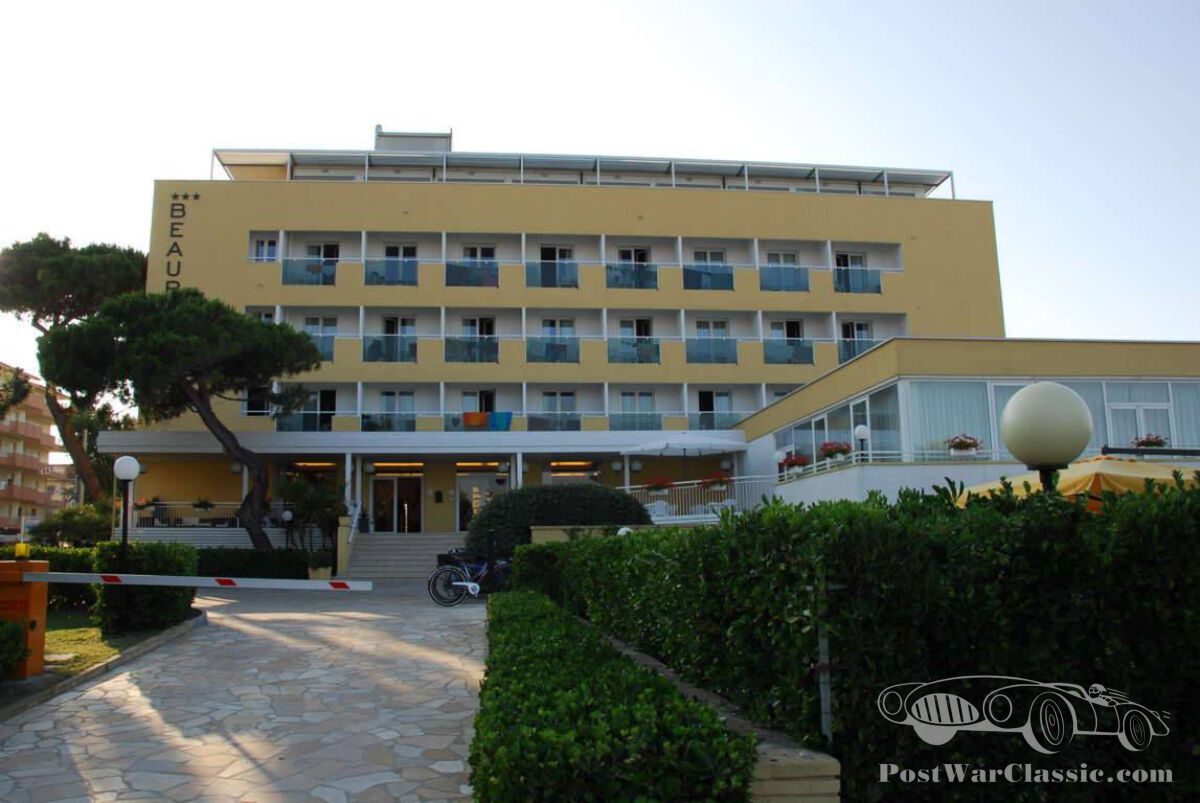
We believe we’ve located the hotel in Riccione, between Rimini and Ancona, directly on the Adriatic Sea. It’s still there and still looks to be a lovely place to sip a Campari on ice on the terrace overlooking the beach, although it’s perhaps not as strikingly modern now as it would have been in the 1950s. It hasn’t changed too much, though, and it’s fun to see how the two young pines - mere twigs in the original photograph - have grown into beautifully shaped trees.
Words: Jeroen Booij; picture: archive
Pubblicato:
giovedì luglio 27th, 2023
Facebook
LinkedIn
Twitter
WhatsApp
Email
Copy