La rivista e il marketplace globale per gli appassionati di auto d’epoca, creati da appassionati.
La rivista e il marketplace globale per gli appassionati di auto d’epoca, creati da appassionati.


Filter
Faccia la sua scelta
- Automobile
-
Marca >>
-
Anno >>
-
- Motociclette
-
Anno >>
-
-
Ubicazione >>
- Parti e altro
-
Marca dell'auto >>
-
Produttore >>
-
Categoria >>
-
Paesi


Omicidio e mistero: che fine ha fatto l’Emperor Special?
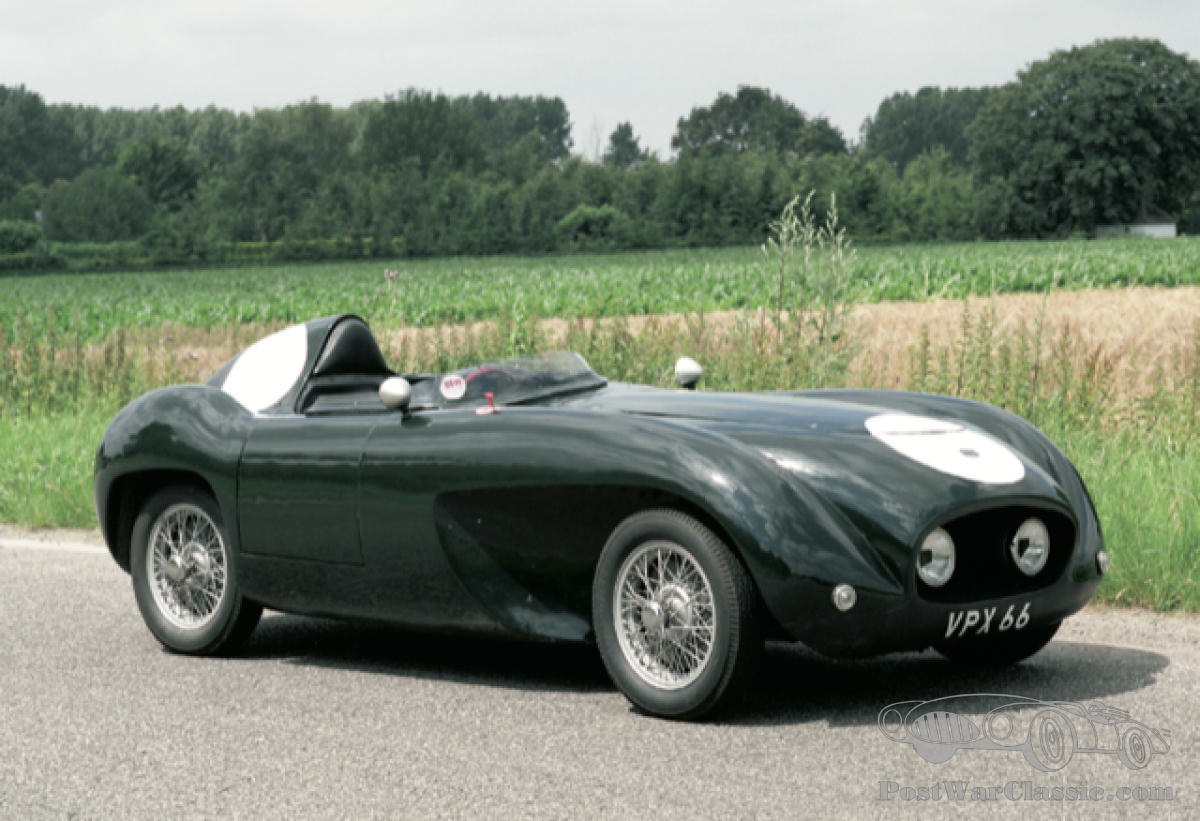
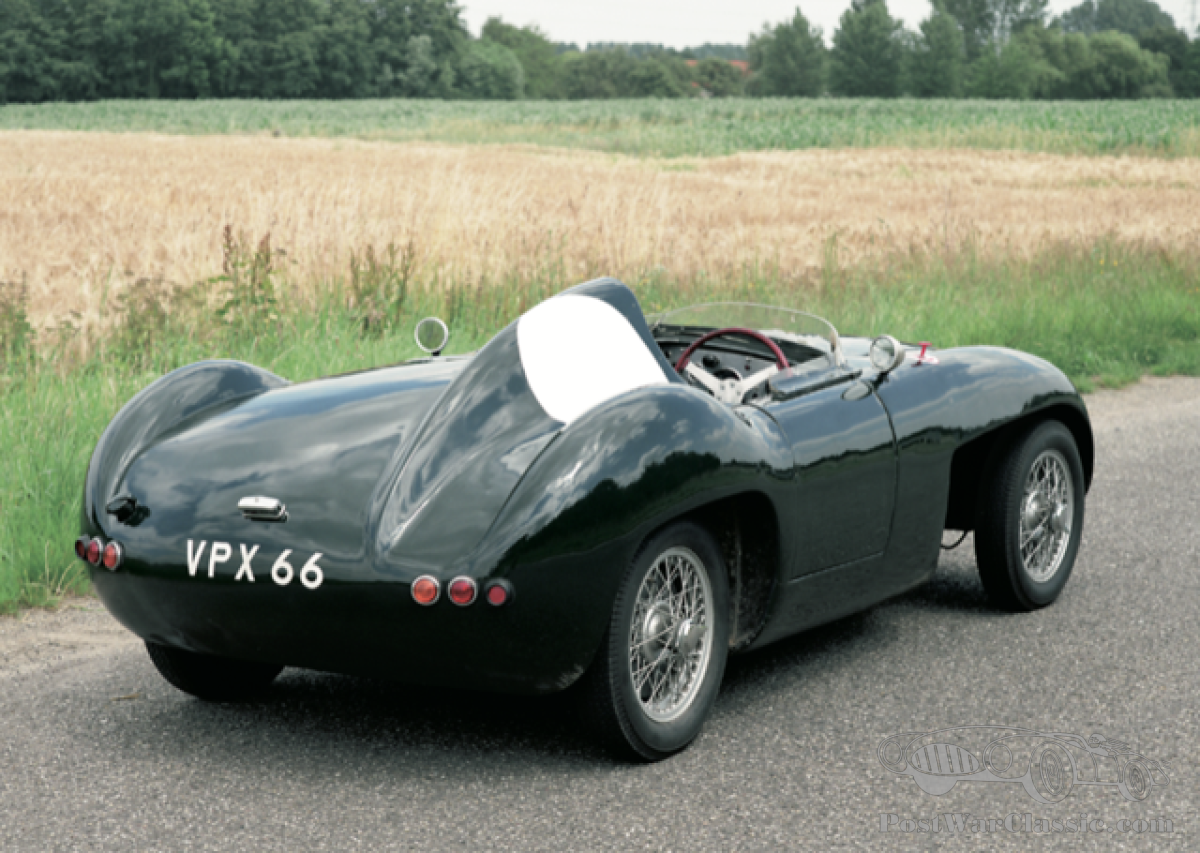


Uno degli aspetti più affascinanti di un archivio è che può sempre riservare sorprese. Ci si immerge alla ricerca di qualcosa di specifico e, lungo il percorso, si inciampa in tutt’altro—apparentemente irrilevante, ma comunque estremamente interessante. Ed è proprio così che ci siamo imbattuti in queste foto della splendida HRG che vedete qui, e che ci hanno subito riportato a una storia che avevamo scritto nel 2018.
Questa particolare auto da corsa, conosciuta come Emperor Special e precedentemente immatricolata TPD 168, è avvolta nel mistero e nell’intrigo, oltre ai trionfi e alle tragedie che ne hanno segnato la storia. I protagonisti di questo dramma? Il pilota David Blakely e la hostess di nightclub Ruth Ellis.
Dal nostro stesso articolo:
"Ellis fu giustiziata dopo aver ucciso il suo fidanzato Blakely in pubblico il 10 aprile 1955. Blakely era il figliastro di Sir Humphrey Cook, patron di ERA, ed era di famiglia benestante. Grande appassionato di auto sportive, fece costruire una vettura da corsa speciale attorno a un nuovo motore HRG 1500 twin-cam, che in configurazione stradale dichiarava 108 CV. L’auto fu realizzata da un ingegnere di Aston Martin, suo amico, su un telaio tubolare a traliccio, con sospensioni anteriori Volkswagen, un retrotreno De Dion e una carrozzeria in alluminio a tutta larghezza, con un design che ricordava una Ferrari Monza. Blakely investì la maggior parte della sua eredità in questa vettura, cosa che non piacque affatto a Ellis. Ma lui doveva considerarlo un investimento valido. Al suo debutto durante il Boxing Day Meeting a Brands Hatch nel 1954, Blakely arrivò secondo, un ottimo risultato, dietro alla Lotus Mk. VIII motorizzata Connaught di John Coombs. Continuò a gareggiare con la macchina, spendendo sempre più denaro a ogni corsa. La sua fidanzata, però, ne ebbe abbastanza. Qualche giorno prima di una gara di Pasqua a cui Blakely si era iscritto, lei lo aspettò fuori da un pub a Hampstead. Quando lui uscì, estrasse una Smith & Wesson dalla borsetta e sparò sei colpi. Morì nel parcheggio."
L’auto sarebbe stata venduta senza il motore poco dopo l’omicidio e l’impiccagione di Ruth Ellis, che all’epoca venne descritta come "la donna più calma mai salita sulla forca". Nel 1999, la vettura ricomparve in vendita, stavolta con un altro motore e una nuova targa, VPX 66.
Ci eravamo già chiesti cinque anni fa: che fine ha fatto l’auto dopo quell’ultima apparizione? Anche le foto nei nostri archivi risalgono al 1999, poco prima della vendita—dopodiché sembra essere scomparsa nel nulla. È mai riapparsa in tempi più recenti?
Testo e foto d’archivio: Jeroen Booij
Pubblicato:
martedì luglio 14th, 2026
Facebook
LinkedIn
Twitter
WhatsApp
Email
Copy
Commenti
andrew
08 Luglio, 17:12
Hi there I did some work for a man called Bill who lived next to Guys Marsh prison in Dorset. He had a Morris bread van that he wanted me to get running for him, and then he showed me his prize possession which was David Blakely's car. He told me the history of it and that he wanted to restore it. This was approx 2008, I believe Bill died in around 2012 and I have lost contact with his wife, although if she is still alive I could possibly get hold of her.
Per saperne di più
Andrew Moorey
27 Giugno, 13:55
The car was briefly owned by Nigel Hulme (Cobra 39PH and Lola T70 racer). It was a non runner at the time but with a little fettling by myself it was put back on the road. The first time I drove it round the village where Nigel lives I was waiting at a junction to pull out when a car pulled up beside me and the older gentleman driving shouted " is that David Blakeley's car?"
Small world....
Per saperne di più
Small world....
William Mahany
15 Marzo 2025, 13:28
The thing to remember here is that the Emperor was not, and is not considered, an HRG. It may have been called such, and even carried an HRG badge in period or now(?), but it never came from or went anywhere the HRG factory. The engine in it was owned by HRG and was their first attempt at making their own twin-cam engine. The engine was based on the long-stroke Singer-based unit used in their road cars which had a single-cam head. HRG loaned the experimental twin-cam engine to David Blakely, for trying out in his 1949 Le Mans Lightweight HRG that he had acquired from his local garage in Penn, Buckinghamshire. The engine would not fit in a standard-bodied HRG car, the wide-angle head being too wide with all its manifolds, but the Le Mans Lightweight body was ideal for it and his racing ambitions were felt a good place to test it. The garage owner bought all the 1949 Le Mans team cars circa 1950 and kept two. He then sold one to Blakely. He and Blakely then went racing with them which included some of the earliest Goodwood Nine Hour races. Blakely then fitted the twin-cam engine and, later, the same engine ended up in the Emperor. HRG probably knew this but they may not have scanctioned it! By then, they had also started developing another twin-cam engine based on the shorter-stroke Singer SM engine, no doubt using the experience from the first one. This was fitted to their own new, fully independent Twin Cam car model, with disc brakes, of which only four were made. That engine is not the same engine type as the engine in the Emperor. When Blakely was killed, HRG went down in their company Fordson van to swiftly remove the twin-cam engine from the Emperor and take it back. The engine was later sold (I have all the original correspondence on it) and it ended up in a chain-drive Frazer Nash. It was re-united with the 1949 Le Mans Lighteight in the late 1970s, where it remains to this day. I own all the original pattern-making from the long-stroke twin-cam HRG project. I have a twin-cam head, many spare parts and several experimental manifolds. I intend someday to make some more...
Per saperne di più
Barry Morse
15 Luglio 2024, 19:28
I've just stumbled across this piece and recollect that in the very early 1960s, I saw a car for sale in Croydon, I think in the driveway of a large house in Addiscombe Road, which I was told was the Emperor Special. However, it was painted red, and I'm convinced it had twin headrests. The general appearance of the body was certainly similar to the car illustrated.
Does this ring a bell?
Per saperne di più
Does this ring a bell?
Nicolas Van Frausum
18 Ottobre 2023, 20:31
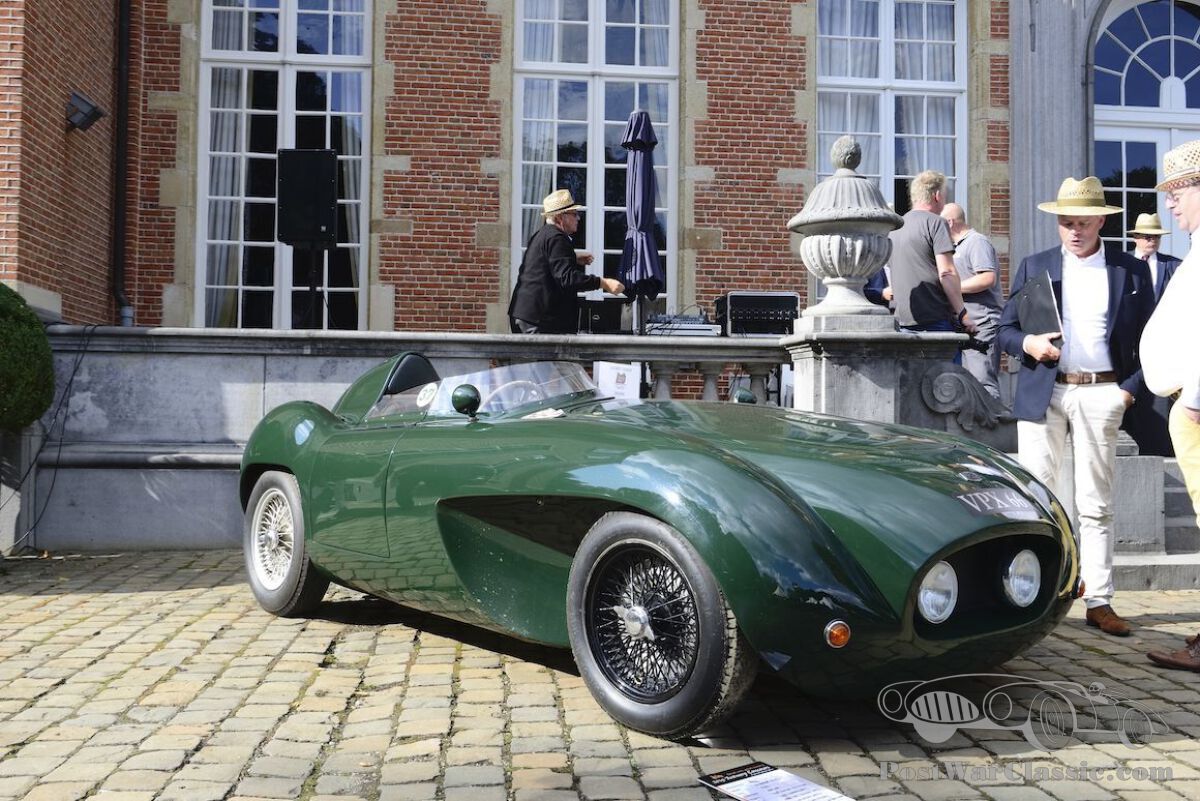
This HRG Emperor has never really disappeared from the radar and has been part of the well-known LMB Collection in Belgium for quite some time now. In recent years, the Emperor has been used in national and international rallies and in 2019 it was a competitor at the 15th Antwerp Concours (see picture attached ) the original aluminium body is hanging in the roof when entering the LMB workshop in Wommelgem near Antwerp.
Per saperne di più