La rivista e il marketplace globale per gli appassionati di auto d’epoca, creati da appassionati.
La rivista e il marketplace globale per gli appassionati di auto d’epoca, creati da appassionati.


Filter
Faccia la sua scelta
- Automobile
-
Marca >>
-
Anno >>
-
- Motociclette
-
Anno >>
-
- Parti e altro
-
Marca dell'auto >>
-
Produttore >>
-
Categoria >>
-
Paesi


PWC Workshop: A veteran gearbox needs a new life.
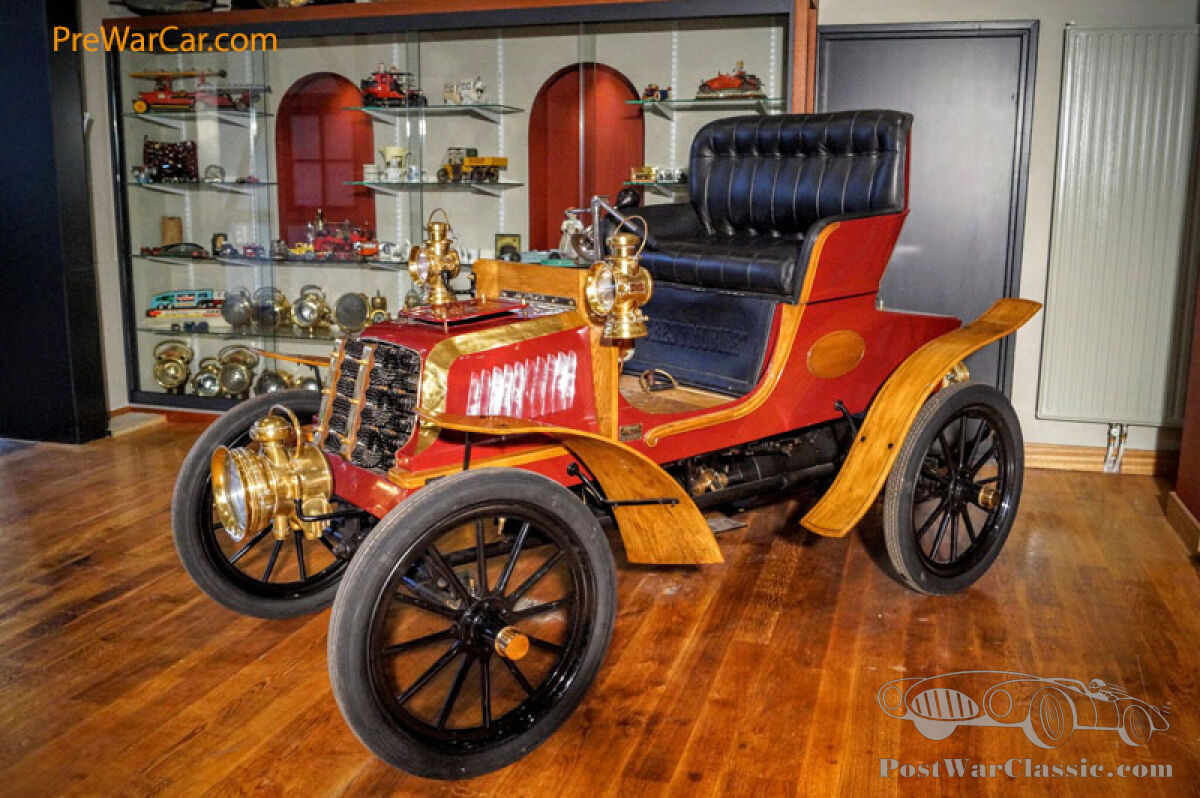
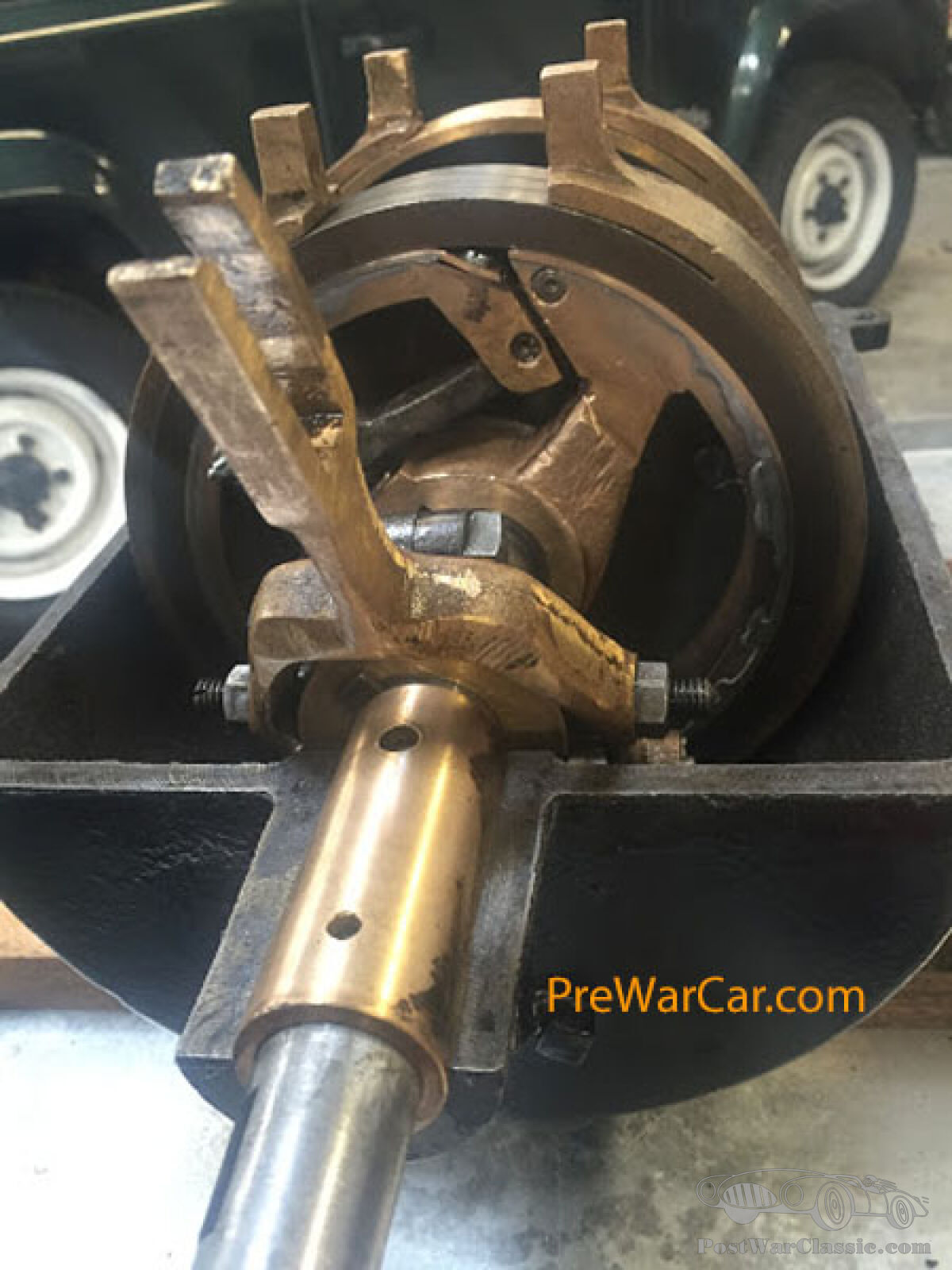


Getting ready for 2016's London to Brighton, this car entered the workshop with some gearbox problems: The high gear was slipping when disengaged, and continued to do so when engaged.
In this case, it's the gearbox of a 1902 Crestmobile. It's a design commonly found in veteran American gearboxes like in early Cadillac's and REO's, just in a little different form. It's a cast iron housing which contains oil, in which 3 planetary gear sets run. 2 brake bands hold 2 different brake drums stationairy, which uses either 1 set of planetary gears for a low forward speed, or 2 sets of planetary gears for a low reverse speed, and there's 1 brake set that holds the drum stationary to the shaft, making the whole assembly "stiff" creating what on a modern gearbox is referred to as a "prise direct".
The gearbox is all cast iron parts, and the brake bands are all bronze castings, causing the brake bands to wear first. Since the 2 low gears rely on the principle of "choosing the path of least resistance", they work quite well even when worn down. The high gear however has to hold the whole assembly firm, because allowing slip will cause the gearbox to start turning freely and the car loses acceleration.
In this case, the brake band had worn down about 0,75mm causing it to grip fairly bad, I was able to turn the outgoing shaft by hand when holding the incoming shaft still. It was at the end of adjustment so something needed to be done.
I've had several ideas on how to approach this:
- Turn the brake round and sleeve the drum with a cast iron liner
- Turn the brake smaller and line it with leather or friction material
- Knurl the surface of the brake to make it grip harder and rise up the surface
In the end, I chose boring both the drum and the brake round and lining the brake band. The whole process can be seen in my photo album here. I think it turned out really well.
I anyone needs similar work done, or any other machining job on their vintage or veteran machine, you can contact me via the editor: [email protected]
Article and work by Jos van Genugten.
Pubblicato:
martedì agosto 2nd, 2016
Facebook
LinkedIn
Twitter
WhatsApp
Email
Copy
Commenti
Sconosciuto
03 Agosto 2016, 21:52
I have owned 3 Crestmobiles pre1904. One car was very basic and had no gearbox, just chain drive to the back axle. The other 2 had 2 speeds but no gearbox . The speeds were sprockets on the back axle with brake shoes engaging in drums to work like a clutch . Only 1 sprocket could be engaged at a time. I did not know Crestmobiles had a gearbox!
Per saperne di più
Sconosciuto
03 Agosto 2016, 19:28
Hello Joe,
I've considered that as well when doing the repair, but a gearbox should never get that hot anyway, the solder flows at about 220 degrees celcius and starts getting soft at around 190 or so. It wouldn't get near there.
Besides that, when engaged the gearbox is completely solid, like a 'prise direct' and no heat is generated at all. The only heat that could be generated is when going uphill in low gear, but because thats only short periods, and the gearbox holds 5 liters of oil, it should never be an issue.
Your suggestion is possible as well, although unorigibal and still very little contact surface. Remember that when engaged, it has to pull the whole car without slipping. And the final note is that having a solid ring around the part made it very easy to turn it true to the shaft, because it was quite a solid piece.
Per saperne di più
I've considered that as well when doing the repair, but a gearbox should never get that hot anyway, the solder flows at about 220 degrees celcius and starts getting soft at around 190 or so. It wouldn't get near there.
Besides that, when engaged the gearbox is completely solid, like a 'prise direct' and no heat is generated at all. The only heat that could be generated is when going uphill in low gear, but because thats only short periods, and the gearbox holds 5 liters of oil, it should never be an issue.
Your suggestion is possible as well, although unorigibal and still very little contact surface. Remember that when engaged, it has to pull the whole car without slipping. And the final note is that having a solid ring around the part made it very easy to turn it true to the shaft, because it was quite a solid piece.
Sconosciuto
03 Agosto 2016, 07:10
A nice piece of work, good thinking for solid repair.
Per saperne di più
Sconosciuto
03 Agosto 2016, 01:55
I like it, but is there any concern that the heat generated by friction might be enough to melt the solder? Given the thickness of the liner, I think if I were doing it I'd have set it up in a dividing head and used a double row of brass or bronze flat-head, socket cap screws.
Per saperne di più