La rivista e il marketplace globale per gli appassionati di auto d’epoca, creati da appassionati.
La rivista e il marketplace globale per gli appassionati di auto d’epoca, creati da appassionati.


Filter
Faccia la sua scelta
- Automobile
-
Marca >>
-
Anno >>
-
- Motociclette
-
Anno >>
-
- Parti e altro
-
Marca dell'auto >>
-
Produttore >>
-
Categoria >>
-
Paesi


The best of Bremen
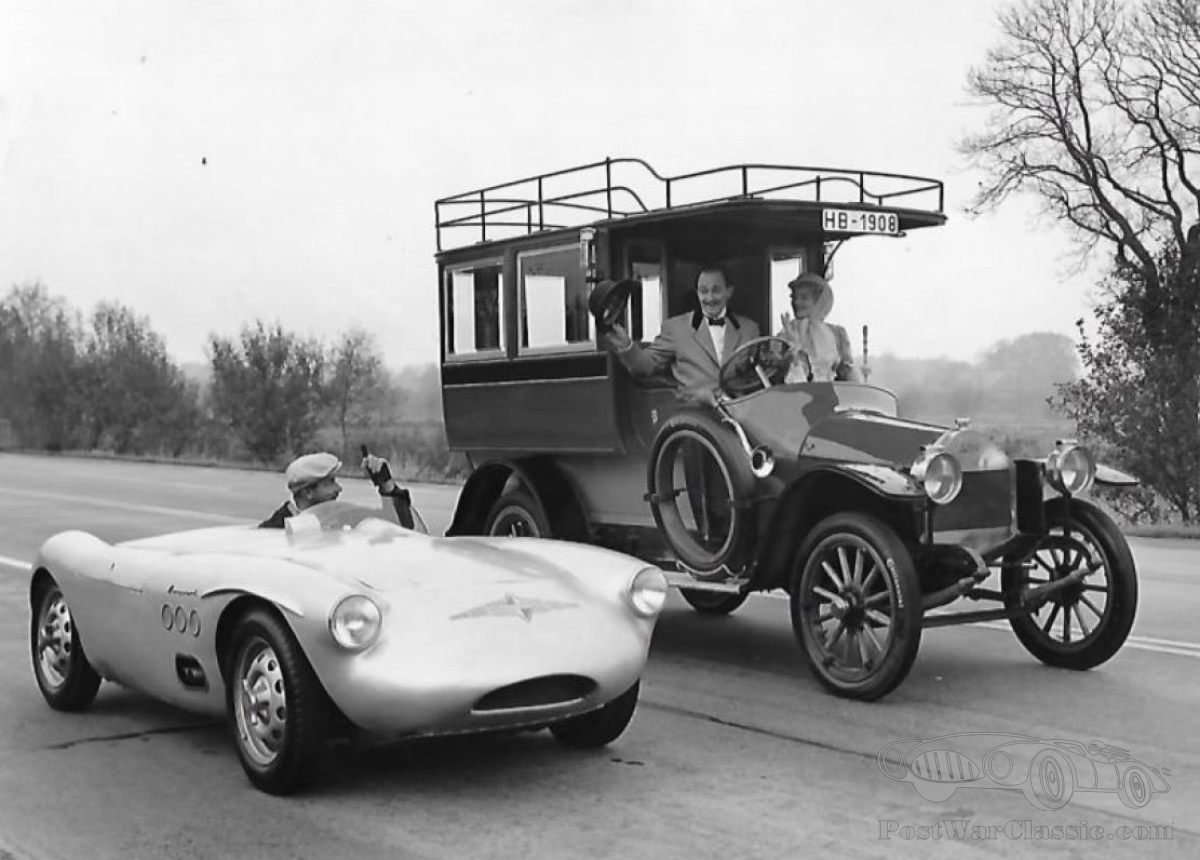

This picture was sent over to us with a plea for more information. All the info that came with it is that the cars were a Lloyd and a Borgward. And that it probably was a PR picture.
Lloyd
With that as a starting point, we thought clues had to be in the car’s origins and the licence plate is another giveaway in that direction. ‘HB’ is for Bremen or Bremershaven, which happens to be the place of birth for both cars: the Lloyd 14/24 Bus that, we reckon, has to be of 1908 vintage as the rest of the registration suggests. That must make it the first, or at least one of the first, Lloyd vehicles built, or probably one of the eldest surviving fuel-powered Lloyd vehicles, as the company built electric buses before 1908. Lloyd became Hansa-Lloyd after a merger in 1914. Borgward came in the picture in the late-1920s when Hansa-Lloyd was taken over and the car seen here appears to be a Borgward Hansa RS racer.
Borgward
All pretty straightforward isn’t it? Perhaps not, as we’re not too sure which model the Borgward exactly is. The RS racers with their much-tuned 1500 engines came in the early 1950s and with their four-in-line with double overhead cams and 16 valves (!) they proved to be potential winners. The engine was even used in Formula 2 up until the late 1950s and early 1960s – by which time it was still competitive to make the late Stirling Moss win the championship (in 1959). By that time a 1500 RS had also made it to the ’53 Carrera Panamericana and in a great number of ‘Bergrennen’ closer to is Bremen home. But what struck us is that the car seen on this picture is different to the other ones seen on the photographs that we could find, notably with the extensions above the front wheel arches. An extra special car? It would explain perhaps the reason for taking this PR picture in the first place?
Words by Jeroen Booij. Picture sent in by Piet Geirnaert
Pubblicato:
sabato aprile 18th, 2020
Facebook
LinkedIn
Twitter
WhatsApp
Email
Copy