La rivista e il marketplace globale per gli appassionati di auto d’epoca, creati da appassionati.


Il mercato; tutte le auto prebelliche in vendita
Panoramica degli annunci correlati all'annuncio 1971 Fiat 500L
-

1973 Fiat 130 Coupé Auto | Historics Auctioneers | Ascot Racecourse | 15th May 2021
Fiat was never really noted for building large luxury cars so the 130 range was quite a departure compared to their wonderful compact cars. The Coupé, based on the same platform as the saloon, was introduced in March 1971 having been designed by Paolo Martin of Pininfarina, who also manufactured the car. With a unique interior design and stunnin.. -
1970 Rolls-Royce Shadow Two-Door Fixed-Head Coupé | Historics Auctioneers
The unitary construction Silver Shadow unveiled in 1965 nudged Rolls-Royce into a brand of new generation of luxury motor cars built by Mulliner/Park Ward. Rolls-Royce Motors formed Mulliner/Park Ward in 1961 by the merger of two Rolls-Royce subsidiaries: Park Ward of Willesden, London, a subsidiary since 1939 and H. J. Mulliner & Co. of Chiswi.. -
1970 Alfa Romeo 1750 GT Veloce | Historics Auctioneers
The first of Alfa Romeo’s Bertone styled coupés, the 1.6 litre Giulia Sprint GT, was launched in 1963. Mechanically the stylish new 2+2 was much the same as the Giulia TI sports saloon, featuring a five-speed manual gearbox, independent front suspension, coil-spring live rear axle and disc brakes all round. A 1300 model, the GT Junior, arrived in 1.. -
1975 Triumph Stag | Historics Auctioneers
The ‘Stag’ name was a development codename allocated when the design project was initiated by Giovanni Michelotti in 1965. None of the subsequent names suggested through the process were ever deemed more compelling, 55 years later, the Triumph Stag still occupies one of the cornerstones of the collector’s car market. The svelte Michelotti styling m.. -
1971 Mercedes-Benz 230 SL Pagoda | Historics Auctioneers
The Mercedes-Benz W113 roadsters, designed by Paul Bracq, were produced from 1963 through to 1971 and were known as the 'pagoda roof' SL. All models boast an inline six-cylinder engine with multi-port fuel injection. Rear-wheel drive configuration was complemented by independent rear suspension, a feature that greatly improved road handling. The 23.. -
1972 Triumph TR6 | Historics Auctioneers
The Triumph TR6 was manufactured for seven years from 1969 and by the time production came to an end in July 1976, it was the best-seller of the TR range. The bodywork closely resembled that of the previous model, the Triumph TR5, but the front and rear were squared off and all TR6s featured inline six-cylinder engines. For the US market, the engin.. -
1972 Mercedes-Benz 350SL | Historics Auctioneers
The Mercedes R107 was launched in 1971 and production continued through to 1989 - a hefty 18 years; the longest single series ever produced by the firm besides the G-Class utility vehicle. The R107 replaced the W113 Pagoda SL in 1972 and was replaced by the R29 SL in 1989. Some 237,000 R107 SL's were built and about two thirds were sold in the U.S... -
1975 MG B GT | Historics Auctioneers
The fixed-roof MGB GT was introduced in October 1965. Production continued until 1980, although export to the U.S. ceased in 1974. The MGB GT sported a ground-breaking greenhouse designed by Pininfarina and launched the sporty 'hatchback' style. By combining the sloping rear window with the rear deck lid, the B GT offered the utility of a station w.. -
1973 BMW 3.0 CSi | Historics Auctioneers
In 1968, BMW introduced a new two-door coupé that was designed and built by Karman. This new model was named internally as the E9 and the first version produced was named the 2800 CS, it featured an increased wheelbase to accommodate a new straight-six engine. The front of the car was restyled to resemble the E3 saloon model otherwise known as t.. -
1977 Morgan Plus 8 | Historics Auctioneers
Introduced in 1968, the Plus 8 became such an instant hit and enduring success that it not only provided the bedrock on which Morgan could build for the future, but quite possibly saved the company at a difficult time in its long history. Searching for new engines, Morgan concluded a deal with Rover for supply of its all aluminium 3.5 litre V8, thu..



In primo piano
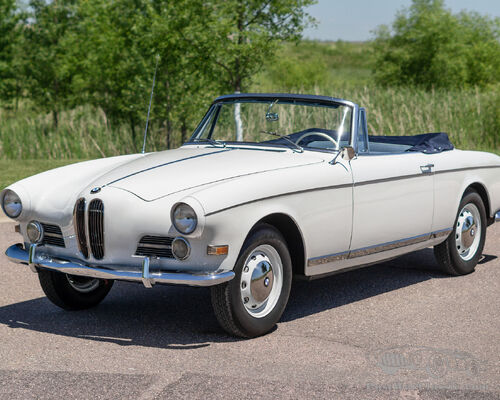
1957 BMW 503 Cabriolet (V8) – 1 di 13 costruiti per il mercato USA – #Esemplare matching
1957 BMW 503 Cabriolet Serie 1V8 in alluminio originale # MatchingCarrozzeria in alluminio originale con stampigliature di fab..
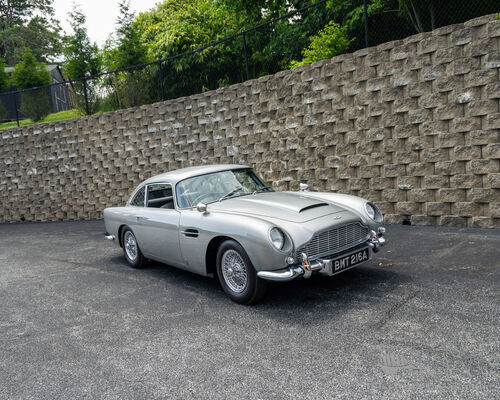
2020 Aston Martin DB5 Goldfinger Continuation | RM Sotheby's | The Monterey Auction
To Be OFFERED AT AUCTION at RM Sothebys' The Monterey Auction event, 13 - 15 August 2026. $1,000,000 - $1,500,000 USD One of 25 examples co..
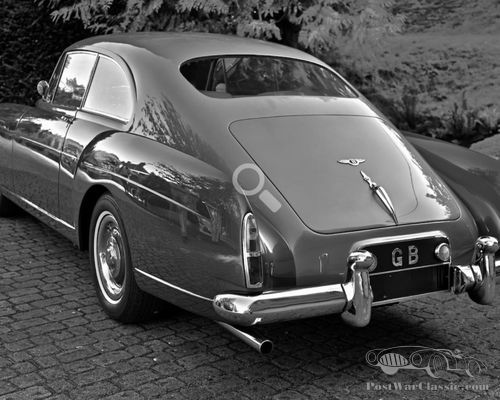
1957 Bentley S1 Fastback by H.J. Mulliner.
1957 Bentley S1 Fastback by H.J. Mulliner.A freshly restored award winning car in like new condition. A later car with Power assited steerin..